I sound my barbaric yawn over the roofs of the world!
Ginny is four months old, and every cliche about parenting has come true, especially, “The minutes go by slowly and the days go by quickly.”
This week, I’ve accepted two challenges: Get Ginny on a nap schedule, and get myself on a practice/writing schedule that fits parenthood.
These two things may go hand-in-hand. As a new dad, I’ve been handling the gigging part of full-time music fine so far, but I’m struggling to find time for the rehearsing and writing aspects.
The day is filled with feedings, changing diapers, cleaning bottles, coxing Ginny to take a nap, cleaning diapers*, feeding again, cleaning bottles again, hopefully walking the dog, then off to play a gig or teach a guitar lesson!
Natalie mentioned to me, “Remember when we had so much time? What did we do with all that time?”
Before Ginny was here I would have said, “I’ve been handling the gigging part of full-time music fine so far, but I’m struggling to find time for rehearsing and writing.”
Time: So it comes, and so it goes!
Footnote:
*Yep, we are using Flip insert cloth diapers; they are great!

The Formula is Simple, Execution is Difficult
What’s the key to success?
Jack Conte says it best: “Make great stuff, find people who like that stuff, and hang out with them.” (Listen to interview on Music Business Podcast here.)
The formula is simple; the difficulty is executing it.
First, the 10,000 hours idea is a reality. It takes a long time to get talented enough at the craft. But talent doesn’t guarantee success, and no one can guess how many hours it takes to gain momentum and a fan base. Right?
Also, this isn’t simply a numbers game of trying to accumulate tons of subscribers, likes, views…Conte points out how some Youtube Creators with one million subscribers might make $2000 per video on Patreon, but then another creator with 5000 subscribers makes four times as much. What’s the secret?
It’s the strength of the artist’s community, the uniqueness of the art, the person behind the art, etc. Things difficult measuring.
* * * * *
I also appreciate how direct Conte is with addressing the negative press over his Medium article addressing the touring loss last year. He wasn’t even asked about it, but mentioned it at the end of the interview.
There were are so many devils in the details about the way the music communities reacted to that blog last year, especially the DIY or punk scenes.
Punk bands couldn’t recognize how their experiences and criticism weren’t really comparable, how solo artists or duos must pay quality session players, especially on tour of this magnitude. So many DIY musicians using couch surfing couldn’t recognize this either.
Yet the road-warriors musicians weren’t surprised how that tour was a loss, and many might not have been criticizing but just acknowledging reality: the music business is a constant dance with numbers.
If your expenses are high, if pay for your owing lighting rig but only doing some club gigs, if you aren’t moving merch numbers as expected, if some club gigs might be 300-400 capacity but the drive is hours between locations, this type of tour won’t profit.
That’s not a criticism, it’s just a dance with the numbers we all must do. It’s why having income diversification is important for musicians.
Plus, it’s the same dance I do at a smaller level.
Last week, my Ford Escape with 250,000 miles broke down on my way to a gig. It was bound to happen. (Gig Life Haiku: Instagram)
This week, I had to made a big choice: Do I chance a $500+ repair (that might not fix the car) or replace the car?
But before that choice, I had other choices: The choice to accept gigs must be worth the miles to get to them, and I know that my first tour put on some miles that weren’t worth it!
The tour dances we do are difficult.
I really hope Jack and Nataly tour again soon.
Jason Segel’s interview on On Point, reflecting on his performance in the David Foster Wallace biopic, had a great quote: “You spend 15 years trying to get there and then realize there is no there.”
My parents said it more simply: “The grass is always green on the other side.”
Isn’t that the truth for artists and musicians?
You might dream about playing a certain venue, recording in a particular studio, hiring a notable producer, opening for a certain band, going on a tour, etc…and the adrenaline rush is great, but never lasts.
It’s so easy to forget how the creative process is what got us “here “in the first place, sitting at the kitchen table and writing or learning a song.
It’s about creating, not chasing.
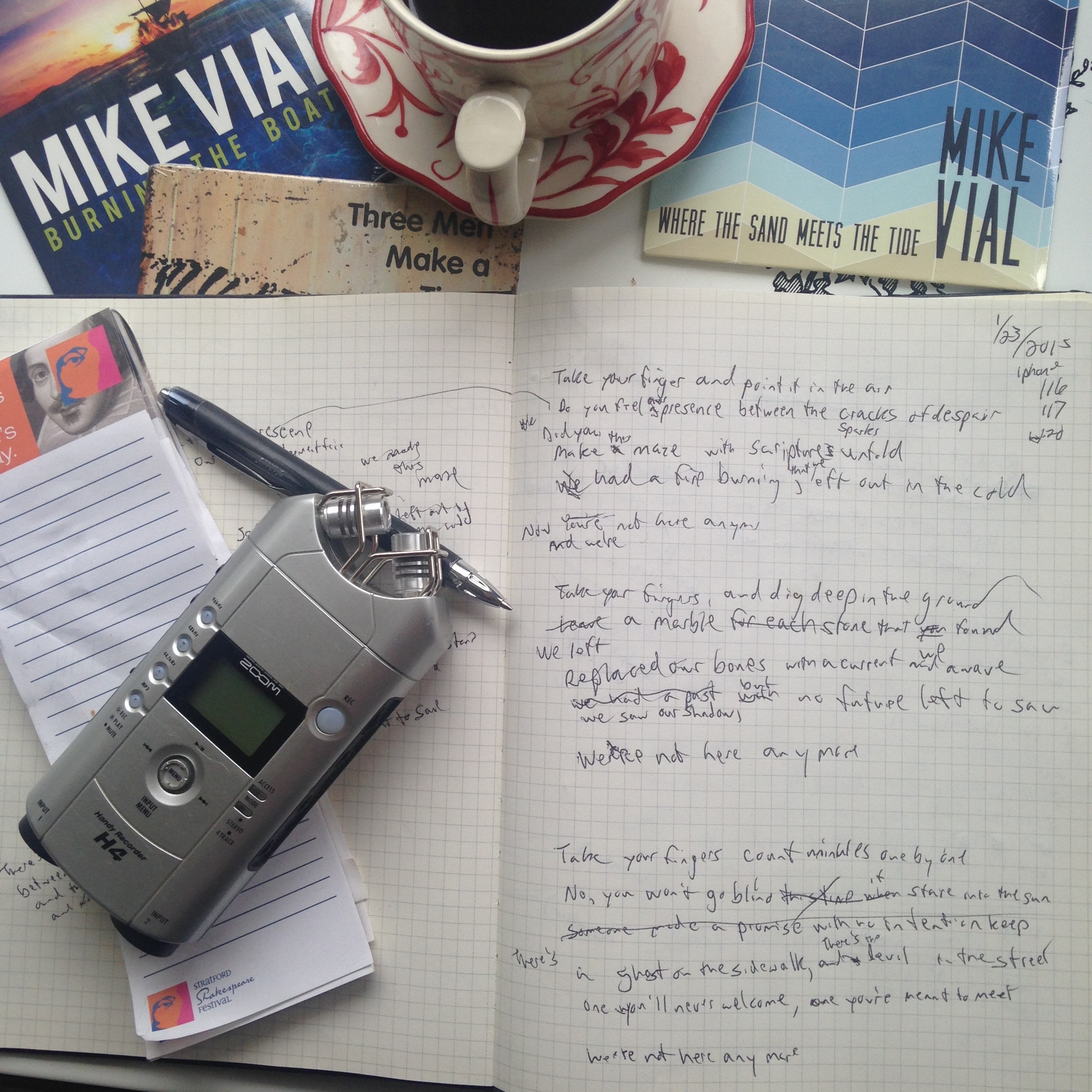
Music Business: The New Rules, but the Old Rules still Apply

Bob Lefsetz posted a blog called “New Rules” that is gold. Solid advice.
However, musicians in their late teens and early 20s need advice about starting out, not only big picture ideas for those established. Here are 11 thoughts for the newbies:
1. Learn to self-record:
It’s one missing skill that’s holding me back. Recording may be cheaper than decades ago, but self-funding a record for 5K, 10K, 20K is still a lot of money; and it’s harder to break even on those releases with sales diminishing. At least track some elements at home or DIY spaces.
Even Sufjan Stevens recorded Illinois unconventionally. (Pitchfork article)
2. Recognize crowdfunding has peaked:
It’s a one time shot, and it’s not an exciting story in 2015 since everyone is pestered by multiple campaigns every year. If you try to do multiple campaigns, expect your friends and family to be annoyed; expect your fans to hesitate. Crowdfunding may help kick start you, but careers are built by looking long term.
3. Pave your own way:
Another artist’s success story is hard to replicate. Most independent musicians who had success through the Internet leveraged previous major label promotion and/or were early adopters to a platform before it peaked. Don’t look at an artist’s history from 2007-2012 and try to replicate it exactly in 2015. Everyone has a unique set of circumstances, strengths and weaknesses. Find your own road.
4. Learn time-management:
There are so many distractions that interfere with what’s really important: writing, practicing, gigging, being present in life. Get on a schedule. Protect your time.
5. Focus on having the time, not the title:
Don’t try to be a full-time musician for the title; focus on being available. It’s the time that’s important, so one can jump at an opportunity, can practice, can compose. Many musicians want to be “full-time” thinking it’s the mission to success, and then quit a day job before they are financially ready, before having the contacts to get work, or even the skills… What if a day job doesn’t take 40+ hours a week, pays most of the bills, and offers chances to gig Thursday through Saturday? That’s a great job!
6. Know your numbers, manage your money:
Artists often say, “I’m not good with the money, that’s why I need a manager.” No. You must be in control of your finances. Open up Excel. Keep track of every cent earned from the beginning of your music business. Keep a weekly and monthly eye on your finances. It’s not hard, it just takes consistency.
7. Pay attention to hidden costs:
Gigging has hidden costs: Car repairs, insurance, fret-work on guitars, equipment replacement, lost time rehearsing, long drives, gas mileage, investing in your retirement–a musician must budget for the hidden costs, not only the monthly bills.
8. Remember, not all gigs are created equally:
That decently paying wedding gig might require 10-20 hours of rehearsing. That OK paying bar gig might not generate any fans. Some students we teach are more demanding than others…Consider all the hidden hours that go into jobs. One might not be able to demand more money from a client, so declining work is just as important as accepting it.
9. Pay attention to your body and your mind:
You need to know how to stay at your best health to perform well. Your sleep, your caffeine intake, your alcohol consumption, your time off recharging, your time exercising–keep your life in order; but recognize a musician’s gig life isn’t balanced, so you need to be consistent in watching your health. Advocate for your needs; don’t party when you work. Avoid spending any money at the bar during your gigs. And remember, you will feel emotionally down at times; regroup mentally and avoid making big decisions when you are run-down.
10. Look out for yourself, especially if you are a solo artist:
To stay afloat, you need to make more money than the contractors you hire. It’s not selfish, it’s how a business survives. If you are: paying session players and other contractors; doing all the booking and generating the gigs; paying for advertising; but not making any money, you aren’t doing anyone any favors in the end when you give up. If you can’t afford it, then reevaluate your options.
Are you doing this because you have something to say? Because you love to travel? Because it’s the only way you can find your audience? Because your genre demands it? Because you have a ego that needs affirmation? Seriously, why do you need to be a touring musician? Are you ready to embrace the difficulties of touring? Be honest with your answer; it will guide your future.
Green Bank, a town without cellphones
I found this story fascinating: “I spent a week in a town without wifi or cell service. This is how I survived…”
Jorge Ramos and Dan Lieberman wrote, “This is because Green Bank sits at the very center of a 13,000 square-mile area known as the National Radio Quiet Zone, which is federally mandated to be free of electromagnetic signals. It has laws banning cell phone service, WiFi, and even radio, all in order to support the Green Bank Telescope –the world’s largest movable radio telescope– which enables radio astronomers to listen to sounds in outer space and collect data from the solar system.”
I had never heard of the National Quiet Zone in West Virginia, but it’s a town not too far from my tour mate, Peyton Totcherman’s home in Charlottesville!
It seems like this is a glimpse into a far past, but it was only two decades ago when this was reality. I didn’t have a cell phone in college, now I can’t live without it.
Yet, I’m finding there is a time and a place to operate like Green Bank in our lives: a self-imposed no cell, no wifi time:
- recording in the studio
- during writing sessions
- eating dinner with friends and family
- walking the dog through the woods
- visiting the farmer’s market
Now that I’m a dad, I’m even more concerned with how much screen time I’m using, the type of modeling I’m offering as a parent, if I’m being present with my child.
I love the irony of Ramos and Lieberman joking how they survived without wifi and cell service, when a whole town does 24 hours a day. I should be able disconnect more regularly, too. Can my relationships and productive time survive if I don’t’?