The biggest debate in the music industry has gotten boring: Which streaming platform will win the most consumers. Spotify, Apple Music, a Google/Youtube redesign…
You can read Paul Resnikoff’s Digital Music News blog for anti-streaming arguments (usually addressing payouts); and you can read Bob Lefsetz for the pro-streaming arguments (often addressing cutting off piracy; data analysis).
Either way, “What’s music’s value?” is a difficult question to unpack because the music industry was built on scarcity, and scarcity has ended.
Whether it was vinyl or CD, the business was built on people hearing songs on the radio (or a TV broadcast) and going out to buy a physical product to listen to the song. As an artist, you had to be picked by a label to get a chance. Plus, vinyl would deteriorate after use. The more you like it, the more likely you will have to buy it again! A perfect system! (And yes, our CDs are deteriorating, too.)
However, scarcity is over. Music is abundant.
Anyone can write, record, publish a song. There is a cost to recording, but that cost is a fraction of what it used to be 10, 15, 20 years ago. And most music is published online at the push of a button!
While debating fair payout rates and copyrights from streaming companies is important, for most of us, it might be more useful to focus a different question: How can artists use the aspects of abundance to their advantage?
I’m still pondering answers. Today, I’m only proposing the question.

I liked that band before they were on the radio…
In 1994, I heard Bush’s “Everything Zen” on Henry Ford Community College radio station, WHFR 89.3. The DJ said, “Once this goes mainstream, we won’t play it anymore, so let’s enjoy it while we can.” During art club one evening, I snuck out the back door, walked down to Desirable Discs music store, bought Sixteen Stone, and felt like the coolest kid in school because I felt like the first kid to have it in my neighborhood. By the time Bush was on MTV, I would show off my early pressings that is missing title on the back of the CD cover. [I know, I’m still a dork.]
What’s the equivalent to that experience now-a-days?
“I listened to them before they had 1,000,000 views on Youtube!” or “I listened to them before they were on Spotify’s Global Top 50!”
Doesn’t have the same ring to it, but it’s actually the same action: seeking and embracing new stuff. Being an early adopter.
Plus, now we have the ability to curate it and share it with our little circles. Like making a mixtape for a friend. So here are some great bands you can say you heard before they had 1,000,000 streams, songs that mean a lot to me.
Sedgewick – Gardens EP
Darlingside – Birds Say
Jean Rohe – Jean Rohe & the End of the World Show
Gabriel Kahane – The Ambassador
Nataly Dawn – How I Knew Her
In April, I sat down to strum my guitar while Ginny was napping, and I wrote one of my favorites, this song called “A World That’s Bigger.” I had looked up how much college is estimated to cost Ginny in 18 years, and almost had a heart attack while looking at the computer screen. (An undergraduate degree is estimated to cost more than both my and my wife graduate degree loans. Whoa!)
Fortunately, songwriting calms anxiety for me.
What doesn’t calm anxiety is the lizard brain, that part of our brain where fear lives. Over the weekend, I did a quick recording while Ginny napped. Then, I debated if I should post it:
- I didn’t nail the pitch of one word perfectly
- I didn’t use an expensive microphone
- I didn’t use an expensive camera
- I didn’t use any expensive recording equipment
- I didn’t do any special effects
But I posted it to Facebook; and turned off my computer, tried to turn off the lizard brain, and fed Ginny some carrots. (She doesn’t like them, yet!)
And then I checked back to see if anyone watched my song, and James had written, “I love the sentiment in this song. Made me tear up a bit thinking about my own 2-year old Quincy. It’s easy to make someone dance, it takes an artist to make someone feel.”
That compliment made my day, and reminds me to ignore the lizard brain.
It’s OK if we don’t use the best equipment. It’s OK if it’s not perfect. Just keep the art human.
Like a lot of rock bands in the 80s, Alice in Chains started out as a hair metal band.
Their first band name: Alice N’ Chains. (Does that stylistic “N'” remind you of another band?)
By the early 90s, hair metal became less marketable; alternative metal or “grunge” was the new sound. I thought I read that AiC’s manager Susan Silver recommended they revise their sound and look. (I can’t find the article, so I’m not sure if it’s factual.)
Either way, it worked! Alice in Chains was a huge success on the tails of Soundgarden and Nirvana.
It worked because that change wasn’t chasing trends or drastic; rather it allowed Layne Stanley’s vocals to be more authentic, bluesy, in range with where he shined. During the 80s, radio promoters had criticized that Alice in Chains’s vocals weren’t the right sound in the metal accepted in 80s. Stanley couldn’t hit those high notes that became expected in those 80s hits.
Was it luck, irony, or fate that his natural sound was the right sound for what became the marketable grunge?
Artists always have a choice about changing their sound, look, and process. Adapting, editing, evolving is essential, but our changes must be not simply for marketability. It has to make sense for the art. It must allow for the strengths to shine.
* * *
Loudwire article here
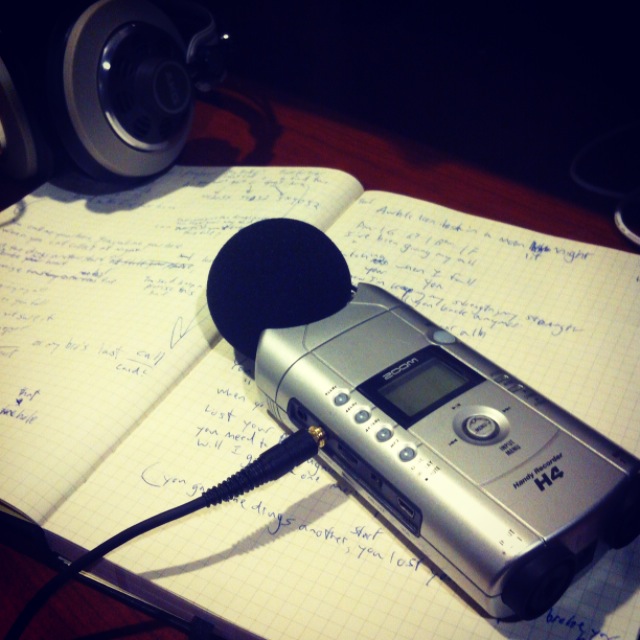
Matt Jones started a music preservation project out of his basement with a “shitty microphone” and an “[obsession] with history.” He’s recorded over 150 musicians from Michigan, with no larger plan than to capture a piece of history and see what emerges.
Natalie interviewed Jones last month, and her story was published in Concentrate, featuring some great photos by Doug Coombe. (Read the Concentrate story here.)
After Natalie got off the phone with the musical preservationist, she mentioned to me one of her favorite quotes. Jones said, “The experience has turned me from a super wound-up, hyper critical, cynical man into somebody who can’t criticize anybody anymore…It’s just so fun to watch people do what they love.”
Every artist needs to find a River Street Project for themselves. I don’t mean a recording project, but an activity that helps one reconnect with the purity of the art. It’s so easy to get cynical, especially in the music business!
But unwinding the cynicism: I’m going to call that the River Street Project effect. The artist starts the project and finds a new sense of self.
During his BBC Music John Peel lecture, Iggy Pop said, “Not everybody is meant to be big. Not everybody big is any good.” Matt Jones is capturing a small piece of musical history, reminding us that music isn’t about being big; it’s about a song’s sense of place.