“Self-employment is a jungle of distractions!”
This morning, I heard Natalie say that statement jokingly, on the phone, to a business owner.
Fact: I don’t know anyone who is better at navigating through the jungle than her. Natalie is the hardest working creative I know.
Her alarm goes off before mine. Once she has coffee made and the dog fed, she is at her Macbook, searching for stories and conducting interviews, for hours. She forgets lunchtime, regularly. Most nights when I return from a gig, Natalie will still be working, sitting on the couch writing and writing and writing.
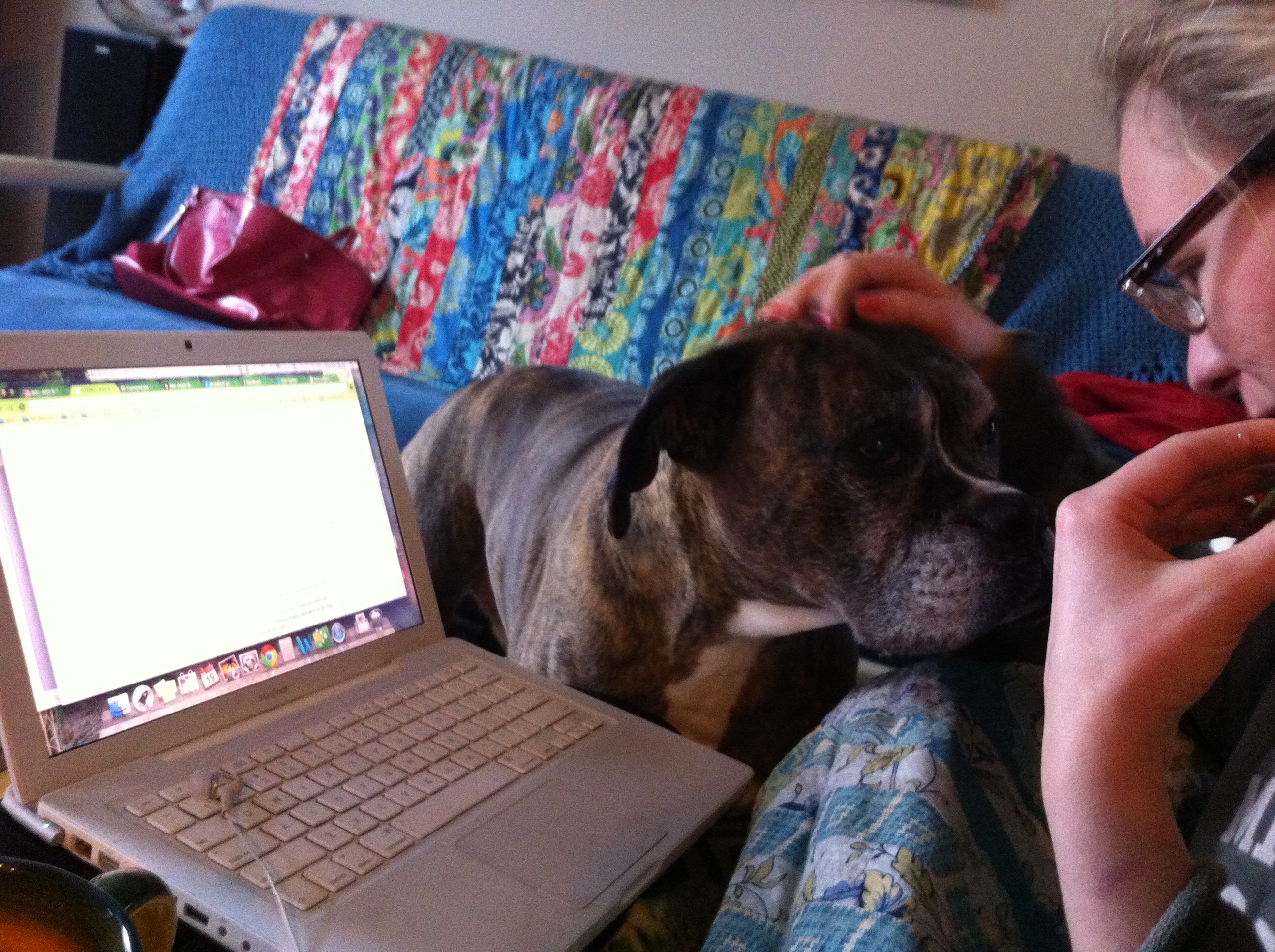
Nat writes about 40-45 articles a month of various lengths and topics; yet somehow she made time to finish and self-publishing her first book. She’s already brainstorming her second book.
During a time where people incorrectly claim journalism is dying, Natalie has redefined the career in the new economy.
* * *
Natalie and I don’t count how many hours we work a week like one might for a 9-5 job. Honestly, it would be hard to calculate because work happens so often in different ways. Even a dog walk turns into a brainstorming session.
But I’ve learned four simple rules from Natalie about navigating the jungles of self-employment:
- List goals/deadlines for each day and month on a white board to stay focused
- Trust that you will overcome obstacles
- Maintain a positive attitude
- Schedule in time for yourself that is non-work oriented
* * * * * *
Last night, I texted Natalie that I would be home from my gig later than expected. My friend Dan was playing at a bar across the street, and I wanted to catch a song or two before heading home.
She texted back, “No big deal. I’m sitting the couch and reading for fun. I’M SITTING ON THE COUCH AND READING FOR FUN!”
I smiled, hoping that when I got home around midnight, I wouldn’t actually find her on the couch working.
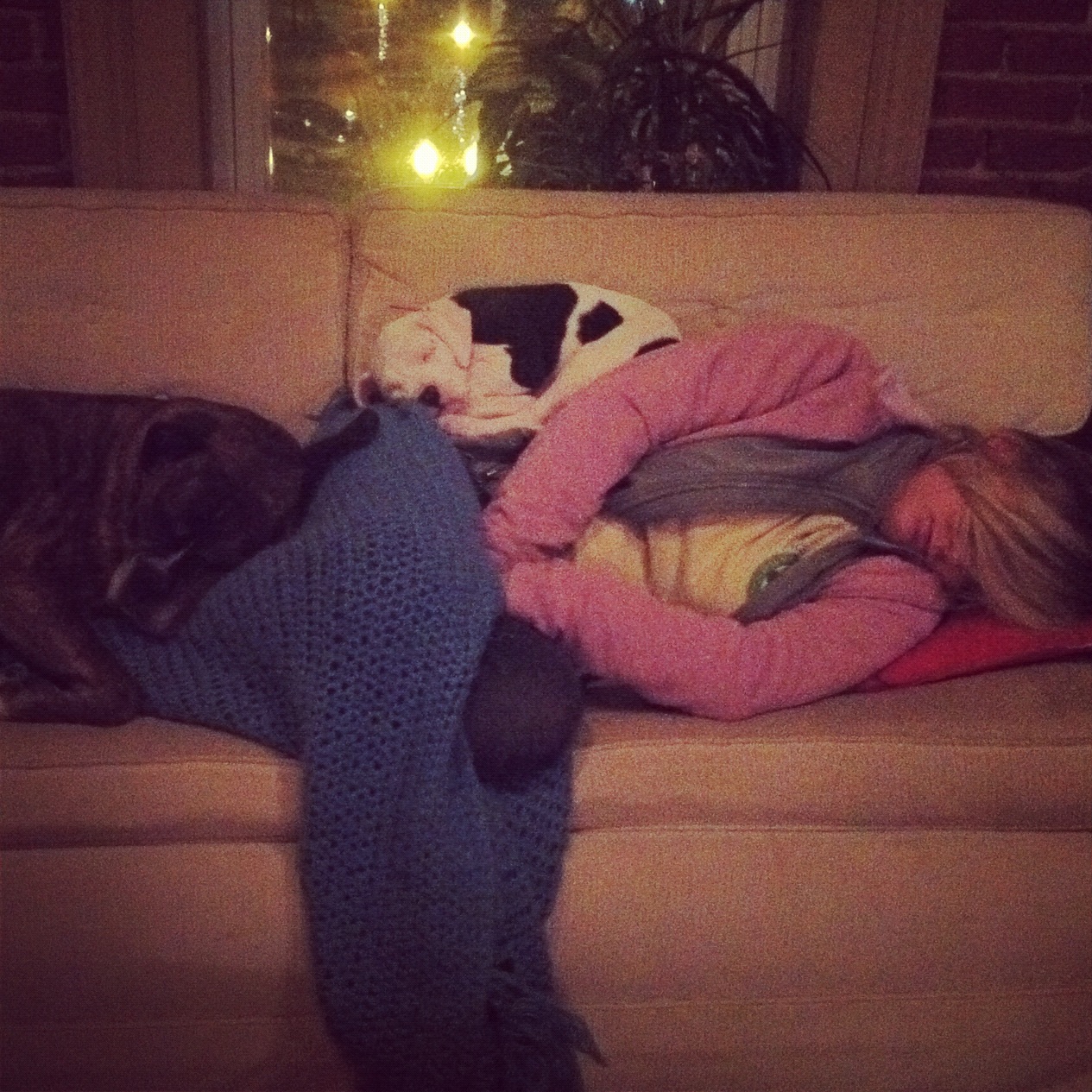
Instead, I found her asleep on the couch with a book on her face and large dog on her lap.
The jungles of self-employment, it’s an exhausting journey.

In the late 90s, even till 2004/05, it meant something to say, “I don’t listen to the radio. Radio sucks!’
It was a statement of honor made by the true music fan.
Now, most of us don’t listen to commercial radio as often as we did before iPods and smart phones and streaming platforms. Radio is having less and less of an impact each year. Tons more of niches and podcasts and Internet radio statements and Spotify playlists and Youtube channels appear each year.
The country’s ears are fragmented into many sections.
Yet, we still might hear someone (usually in their 30s or 40s) say, with pride, “I don’t listen to the radio!”
Of course you don’t! Most of us don’t!
Yet most adults are overwhelmed. They don’t know where to go to find new music they will enjoy. There are so many places to listen to new music, it’s overwhelming.
Now, it means more to make a statement about where you are finding new music, rather than saying where you aren’t finding it.
* * *
I thought I’d share some spots where I’ve been discovering new music:
- CBC Radio’s The Signal (late at night)
- 107.1 FM Tree Town Sound at 6 PM on Sunday with Matthew Alturda
- Progressive Torch and Twang on 89.1 FM the Impact from MSU
- EMU’s 89.1 FM Roots Radio Project with Jeremy Baldwin
- Fearless Radio out of Chicago
- Ann Delisi’s Essential Listening Parties every third Tuesday at the Majestic Cafe; and her weekend morning radio show on WDET 101.9
- WXPN
- Pull the Plug Podcast from Kitchener, Ontario (note, these music-loving, concert-attending kids can get explicit! There are no rules on Internet radio!)
- My friend Jacob Poppe’s shares and playlists on Spotify
- Fusion Show‘s concerts & recommendations on their Facebook page
- La Blogotheque on Youtube
Measuring life’s decisions by the numbers
Kid Rock’s concert tickets are $20. Apples are $0.25 cents cheaper at the other grocery store. I spent $3.48 for a gallon of gas instead of $3.69 elsewhere.
We measure life’s decisions by the numbers.
When it comes to spending and saving money, numbers guide us: X amount of money is earned; I can afford to spend Y amount in my budget.
But there is another color to numbers, one that isn’t as obvious, that is important: the impact on our local community:
- Spending $20 at a big box store vs. spending $20 at your local grocery store.
- Spending $10 on the major label artist’s album vs. buying your local musician’s release from their merch table.
- Spending $30 to attend a concert at the stadium concert vs. $30 at the volunteer run music venue…
The importance of spending at our local, small businesses has been talked about a lot over the last decade. (See: 3/50 Project)
But what hasn’t been measured is how good it feels to support that local business, that warm feeling inside your heart, not just your stomach, when you buy coffee from an independent café vs. the chain.
We can’t measure that, how good it feels, with a simple number.
But we can sure feel it.
When England fell to the plague in 1665, people had no idea what was spreading the disease. The authorities needed to do something, so they ordered the immediate killing of cats and dogs.
Sadly, this had the opposite effect: the rat population soared (and rats were spreading the plague from infect fleas). (Dolnick 25)
Sometimes when we have no idea what to do when facing conflict, it feels better to do something than nothing. Killing the cats and dogs is easier than creating something new. (Business sales are down, so I’m going to have massive layoffs; my concert was poor attended, so I’m going to stop performing for a while.)
Unfortunately, killing the cats and dogs can be worse than doing nothing at all.

Searching for the Philosopher’s Stone in the Modern Age
Isaac Newton was one of the most impressive scientists to walk on earth. (The dude invented calculus!)
But Isaac Newton also believed in some of the most ridiculous, mythical ideas, too. (He was equally obsessed with alchemy, searching for the philosopher’s stone.)
Isaac Newton’s fellow scientists of his day, ones in the Royal Society, shared the same disconnects: While they discovered modern breakthroughs that would change the way we understood mathematics and science, they would also adhere to their old beliefs in mermaids, or mad theories like the sweat from a hanged man’s hand having healing powers…
Discovering a new breakthrough doesn’t mean one abandons a false myth…
We are not immune to this in our modern age.
It’s not that we still believe in mermaids or alchemy; but a new philosopher’s stone: We believe that the simple act of posting a video on Youtube or Facebook or Twitter will instantly reach stardom. (Going viral can happen to anyone!)
Or that the key to getting a new job is signing up for LinkedIn and spamming every acquaintance’s email account.
We believe that music still needs to be made in expensive studios on $100,000 recording budgets. We equally might believe we can “do it all ourselves” and achieve greatness on a budget of zero because of the Internet…
Truth or reality often get lost somewhere in the middle. The philosopher’s stone we seek is usually not real. A Youtube video doesn’t simply go viral without other factors. Sure, $100,000 budgets for recording aren’t necessary, but I doubt many people can achieve greatness on $100 and only using Garageband and a cheap microphone.
Yes, our songs or art have the potential to reach an audience, but that doesn’t mean it’s any easier today than 20 years ago, even if posting to the Internet is as easy as a click away. It still needs to reach people…
There is one philosopher’s stone that is real: That is the wonderful feeling you get when you have created something, whether it’s heard by thousands of people or only your own ears.
My musical friend (and engineer) Mark Sobczak said the two best feelings he’s had are falling in love with his wife, and finishing a song.
Artistic expression is as close as we will ever get to turning ordinary substances into silver and gold.