Do artists “feel” more? Are songwriters more susceptible to substance abuse?
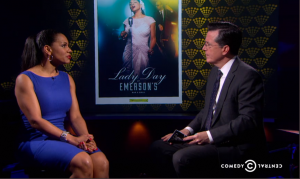
Last night while watching the Colbert Report, Natalie and I caught Audra McDonald’s interview about playing Billie Holiday. McDonald shared the experience of conveying Holiday’s voice on stage, a voice that was full of emotion, a voice affected by substance abuse problems by the end of her career.
“If you think about other singers who had issues like this…They are experiencing everything at a deeper level, so maybe we don’t have to…” McDonald emphasized artists feel more.
This is one of those cliches that sounds true, but I don’t believe it.
I don’t think songwriters or artists feel more emotion than the average person. Instead, I believe there is a creative impulse in all of us.
I also don’t believe “artists” are more susceptible to substance abuse because they are artists.
Maybe substances are more prevalent in artistic circles or environments (bars, clubs, etc), but it has nothing to do with being an artist.
No, both of these things have everything to do with the human condition. Which might be why art, music and expression are so important, for all of us.

I’ll be playing some fun, free festivals in Michigan this summer! Let’s enjoy this well earned, summer weather:
June 5, 2014 – Chelsea Sights & Sounds – Chelsea, MI East Alley Stage, 6:30-8:30 PM
June 14, 2014 – Top of the Park – Ann Arbor, MI – Groove Stage, 6 PM
August 2, 2014 – Brighton Art & Acoustic Music Festival – Brighton, MI 12-1 PM (Stage C), 2-3 PM (Stage A), & 4-5 PM (Stage C)

I’m in my thirties, which means on Saturday night, you can find me hanging out on the couch with my wife and dog, watching a movie on Netflix, rather than [insert anything one does in their twenties].
At times, I feel guilty about this. I love live music. Why don’t I attend more live shows?
* * * A Young Person’s Game * * *
The music industry says music is a young person’s business. While true, this statement bothers me.
The music industry markets to a younger audience, so it’s no surprise that’s who they attract. Folks like me are ignored. What if more concerts were set-up for adults rather than youth? Could adults take back live music?
I thought I’d brainstorm ways smaller venues–live music clubs– could attract adults to attend shows.
1. Offer early concerts, right after dinner time
I’d love to go see a show on a Tuesday, but I’m not going to attend a concert at 10 PM on a weeknight. Most adults have to wake up early. Start a show at say 7 or 7:30 PM rather than 9 or 10 PM.
2. End the shows earlier
Bands, I’m sorry, but you often play too long of sets.
It might seem counter-intuitive, but shorter sets might be more desirable for adults. Headliners, maybe you should do 65-70 minutes. Opening acts we’ve never heard of? 20-25 minutes. Seriously.
3. Limit band bills.
Most adults aren’t going to attend a club show with four or five bands on the bill, especially if the night is going to last for hours.
Even the “three bands on a bill” is pushing it. Remember, we are probably paying babysitters. We have to work the next day. We want a guarantee we will enjoy are free time, which is hard to come by.
4. Offer shows with seating and tables
Many live music clubs (200-500 capacity) only offer general admission styled concerts. General admission club shows might be fun for teenagers, but they are not fun for anyone who is smart enough to avoid energy drinks or Mountain Dew.
Give us a chance to sit! We want to be attentive, rather than bumping elbows with the idiot spilling beer on us.
There are problems with these concepts, but I think they are fixable.
Problem one: beer sales
Clubs want longer show times because they want to sell more beer during the night. Two hours of time vs four hours of time will limit beer sales.
Possibility:
Adults might be willing to pay a few extra dollars for a show that is more desirable. Offer unique craft beer or craft cocktails and don’t be afraid to charge a bit for it.
Problem two: again, beer sales
Adults don’t drink as much as twenty-somethings, limiting bar sales.
Possibility:
Team with a pop-up food vendor or food cart and offer quality, interesting food! Make up for cheap beer sales with unique hospitality.
Problem three: draw
Bands offer large bills because they can’t draw more numbers on their own. If every band can get 20-30 people to a show, then the club is happy.
Possibility:
What if these larger band bills are discouraging more than they are gaining? What if a club gains more regulars by being more attractive to adults? What if higher priced, quality hospitality offsets a few less twenty-one-year olds drinking Pabst?
* * *
There’s no perfect solution to getting people to attend smaller concerts, but with recorded music being more readily available to enjoy online, live music attendance should be more encouraging.
What do you think, adults? How could we get you to attend more live music?
Pizza, and the difficult choice of doing the right thing on an empty stomach
A few months ago, I visited my favorite Ann Arbor pizzeria that I’ve enjoyed for a decade. That day, I walked up to the counter and witnessed the owner berate one of his employees, irrationally.
The owner yelled at his employee for allegedly leaving a styrofoam container on the counter. The employee, a college-aged young man, desperately defended himself. “I didn’t leave it there! I swear!”
The owner retaliated by throwing the styrofoam at his employee. “Stop lying!” he said between swear words.
I stood there at the cash register in disbelief, feeling a great, empty sadness in my stomach that even pizza couldn’t fill.
I vowed to never eat there again.
* * *
Today, I was on a hunt for pizza, and I almost went back to said pizza place. I felt my feet walking me there out of habit, and I felt that emptiness in my stomach return. Was it OK to ignore my conscience?
For a second I stopped walking, and decided I would compare the prices of other pizza spots on my phone, as if price had anything to do with this decision.
All of this was an excuse. Breaking a habit is difficult, especially on an empty stomach.
But I made the decision to go elsewhere. I went to Cottage Inn Pizza instead.
I might be paying a dollar or two more for my delicious pizza, but I’ve also watched the staff smile, chat, and laugh while I write this. I now have a new favorite pizza spot.

You don’t need a new guitar, or a new [insert thing here.]
I’ve been playing the same guitar since 2001.
A Taylor 515ce.
I saved up enough money during a summer job between college semesters and bought my first nice guitar.
This instrument has followed me through college, multiple moves, my teaching career, recording sessions, 70,000+ miles of traveling for gigs, my wedding. Three of every four songs I’ve ever written has been on this guitar.
I know this guitar more than I know myself.
Yesterday, Seth Godin shared how he’s been using Typepad for his blog for “a decade or so…despite the cool kids” telling him he should move it to different platform…
I think there’s an important reminder in this:
As artists and musicians, as writers and creators, we don’t really need the next flashy thing. You don’t really need to use the next blogging service or the latest guitar. It’s good to know one thing, and know it really well. But the key is to use it, every day.
Work. Practice. Learn. Grow.
That’s what’s important.