Yesterday, Riot Fest posted an atrocious PR photo spoofing the Twitter campaign that was used to gain national attention of the child victims kidnapped in Nigeria.
Not one person publicly criticized the photo. Not one person.
The photo got 500+ likes on Instagram.
When I woke up today, I will admit realizing a personal irony: It’s easier for me to overact about a music festival’s promo photo because I have no idea how to feel about an atrocity happening miles away from my comfortable life.
But I also am left asking another question, “Where’s my generation’s Pete Seeger?”
I don’t mean musically; I mean a songwriter who actually stands for something, and continues to walk that journey until the shadow of death.
Not one band playing the festival said anything about that photo.
We’ve lost something, folks.

I read somewhere that it takes 21 consecutive days to make an action an habit.
Habits are a hard thing to break, but I’ve been evaluating my productivity and happiness during this spring. I finally made a simple decision that has helped me avoid procrastination:
I deleted all social media from my phone.
(Additional note: I also changed the passwords to complex things that I won’t memorize to prevent myself from signing in from mobile browsers!)
I don’t want to abandon Twitter and Facebook. I love staying in touch with people, seeing their photos, keeping up with news articles, etc.
But spending time on my computer doesn’t make me happy. Playing music does; spending time with my wife does; reading a book does; writing a poem does; taking my dog for a walk does. (Or at least the walks make Lois happy.)
So I’m on day five of limiting my media consumption, and, coincidentally, I’m on day five of practicing more music. I’m also a little happier.
Let’s see if I can stick with it, at least for 21 days.

Oh Lois, you are unhappy when your owners are looking at blinkie screens, too.
Do artists “feel” more? Are songwriters more susceptible to substance abuse?
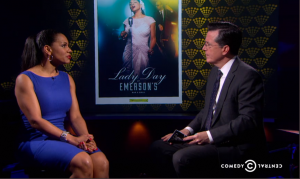
Last night while watching the Colbert Report, Natalie and I caught Audra McDonald’s interview about playing Billie Holiday. McDonald shared the experience of conveying Holiday’s voice on stage, a voice that was full of emotion, a voice affected by substance abuse problems by the end of her career.
“If you think about other singers who had issues like this…They are experiencing everything at a deeper level, so maybe we don’t have to…” McDonald emphasized artists feel more.
This is one of those cliches that sounds true, but I don’t believe it.
I don’t think songwriters or artists feel more emotion than the average person. Instead, I believe there is a creative impulse in all of us.
I also don’t believe “artists” are more susceptible to substance abuse because they are artists.
Maybe substances are more prevalent in artistic circles or environments (bars, clubs, etc), but it has nothing to do with being an artist.
No, both of these things have everything to do with the human condition. Which might be why art, music and expression are so important, for all of us.
I’ll be playing some fun, free festivals in Michigan this summer! Let’s enjoy this well earned, summer weather:
June 5, 2014 – Chelsea Sights & Sounds – Chelsea, MI East Alley Stage, 6:30-8:30 PM
June 14, 2014 – Top of the Park – Ann Arbor, MI – Groove Stage, 6 PM
August 2, 2014 – Brighton Art & Acoustic Music Festival – Brighton, MI 12-1 PM (Stage C), 2-3 PM (Stage A), & 4-5 PM (Stage C)

I’m in my thirties, which means on Saturday night, you can find me hanging out on the couch with my wife and dog, watching a movie on Netflix, rather than [insert anything one does in their twenties].
At times, I feel guilty about this. I love live music. Why don’t I attend more live shows?
* * * A Young Person’s Game * * *
The music industry says music is a young person’s business. While true, this statement bothers me.
The music industry markets to a younger audience, so it’s no surprise that’s who they attract. Folks like me are ignored. What if more concerts were set-up for adults rather than youth? Could adults take back live music?
I thought I’d brainstorm ways smaller venues–live music clubs– could attract adults to attend shows.
1. Offer early concerts, right after dinner time
I’d love to go see a show on a Tuesday, but I’m not going to attend a concert at 10 PM on a weeknight. Most adults have to wake up early. Start a show at say 7 or 7:30 PM rather than 9 or 10 PM.
2. End the shows earlier
Bands, I’m sorry, but you often play too long of sets.
It might seem counter-intuitive, but shorter sets might be more desirable for adults. Headliners, maybe you should do 65-70 minutes. Opening acts we’ve never heard of? 20-25 minutes. Seriously.
3. Limit band bills.
Most adults aren’t going to attend a club show with four or five bands on the bill, especially if the night is going to last for hours.
Even the “three bands on a bill” is pushing it. Remember, we are probably paying babysitters. We have to work the next day. We want a guarantee we will enjoy are free time, which is hard to come by.
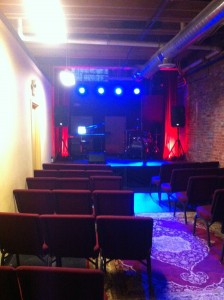
4. Offer shows with seating and tables
Many live music clubs (200-500 capacity) only offer general admission styled concerts. General admission club shows might be fun for teenagers, but they are not fun for anyone who is smart enough to avoid energy drinks or Mountain Dew.
Give us a chance to sit! We want to be attentive, rather than bumping elbows with the idiot spilling beer on us.
There are problems with these concepts, but I think they are fixable.
Problem one: beer sales
Clubs want longer show times because they want to sell more beer during the night. Two hours of time vs four hours of time will limit beer sales.
Possibility:
Adults might be willing to pay a few extra dollars for a show that is more desirable. Offer unique craft beer or craft cocktails and don’t be afraid to charge a bit for it.
Problem two: again, beer sales
Adults don’t drink as much as twenty-somethings, limiting bar sales.
Possibility:
Team with a pop-up food vendor or food cart and offer quality, interesting food! Make up for cheap beer sales with unique hospitality.
Problem three: draw
Bands offer large bills because they can’t draw more numbers on their own. If every band can get 20-30 people to a show, then the club is happy.
Possibility:
What if these larger band bills are discouraging more than they are gaining? What if a club gains more regulars by being more attractive to adults? What if higher priced, quality hospitality offsets a few less twenty-one-year olds drinking Pabst?
* * *
There’s no perfect solution to getting people to attend smaller concerts, but with recorded music being more readily available to enjoy online, live music attendance should be more encouraging.
What do you think, adults? How could we get you to attend more live music?