Thoughts on DMN’s 17 Myths of the Music Industry, Myth 3
Interesting post for musicians and artists: http://www.digitalmusicnews.com/2015/11/10/17-most-laughable-myths-of-the-music-industry/
But the overall optimism needs to be curbed with a healthy dose of reality. Today, I’m going to dissect #3: Streaming
* * * *
While I agree it’s time to move on from the streaming “debate”, it’s only because we can’t argue from the consumer standpoint, that market already decided.
The scarcity of music ended years ago, Seth Godin called it in 2009; and the American public is catching up now, moving from early adopters to middle adopters, of the streaming platforms, so it’s a fool errands to fight it–but we must not be naive and assume it’s “good” for songwriters in the end.
Maybe it will be “OK”, but my instincts tell me the golden era for DIY or indie artists could carve out a little touring circuit, and get sales to stay a float, was 1999-2009, and then there was a slight bump of crowd funding from 2011-2013 for those who had fan bases to leverage, usually found from starting on a major label.
* * * Fun with math: How many hours of music do you listen to a day? * * *
Every millennial or older will remember listening to a CD over and over and over, but we had a limited catalogue of CDs we could afford. So we had to listen to it over and over.
The action of getting a fan to buy one item is a much different behavior than that same fan doing something 100-1000s of times (streaming a song). Time is limited. How much can a person listen to in a day, week, month? Now they have the entire world of music at their fingertips.
I love that new Adele song. I listened to it five times last week.
Today, I feel like listening to Pink Floyd, and the entire catalogue is there! Plus so is the world of music at my fingertips. Tomorrow, I’ll listen to Chris Dupont’s new record.
A sale of one song is 1500 streams equal one album sale, according to Billboard. How long does it take to get to 1500 streams of a full record of 10 songs? Let’s say 3 minutes per song, that’s 75 hours of listening!
And if you are paying Spotify user like me, but listen to music a lot, probably 2-4 hours a day between time watching my baby, using it for teaching guitar lessons, using songs for song study–my $7 that goes to all the royalties gets sliced up a lot, more than just the average $0.005 per stream.
And some one who uses the free tier, the ad-service pays about $0.002 per stream.
Do the math, Ari.
Seriously, how many true fans is it going to take to equal what Dar Williams could accomplish as she carved out a career in 1994-1997 in East Coast folk-circuit? Or That Death Cab for Cutie had to carve out on their first CD during those first tours? Or the Myspace band era that got folks to download on iTunes?
* * * The Playlist Phenomenon * * *
Another factor is nascent playlist phenomenon, how most large streams for undiscovered indie acts are coming from the luck of getting added to a Spotify playlist, but I’m noticing a lot of these playlists are consumed by grazers. Those aren’t going to become a lot of “true fans”.
Plus, these playlists get a lot of steams overseas, so American artists struggling to stay afloat get a bump on Spotify, but can’t tour it; or they face a challenge of figuring out if it’s worth touring overseas before you can even sell out five or ten clubs in USA markets.
I don’t mean to be pessimistic, but the overly optimistic viewpoints aren’t helpful anymore. A healthy dose of reality is needed to prepare future songwriters.
You can’t Kickstart a career, it’s called a start. It’s a great tool to get a kick at first, but we live in a country where income inequality is obscene. Where teachers have to work second jobs to support families, where the major university in my town posted a part time job for $13 hours a week for the writing program and require a BA, but prefer an MA. (LOL!)
So be realistic, how many folks can afford to be patrons of artists, and how many artists will they be able to support, when they have student loan payments of $300-500 a month? Plus, the action of buying something is a one time thing, vs the idea of subscribing and adding a monthly payment to your budget. That’s psychologically different, and many can’t afford to do so.
So yes, we need to put our music on the streaming catalogues, because music is already free. And yes, I think this might be good for music listeners in the long term; but the data isn’t great for the songwriter, no matter how you slice it. Most of us aren’t going to afford groceries with streaming revenue, let alone affording the next record.
But it’s better than when folks just torrented the music, and if a platform like Apple Music or Spotify provides a great listening experience, then we should in embrace it as songwriters because you can’t find the changing tided; instead you have to adapt and create new other things.
(Again, I don’t think subscribing and crowd funding are it, especially as the middle class erodes, but they are pieces of the puzzle right now, and offer a little help at first.)
* * * *
Dar Williams guest essay from American Songwriter, May 2015: “One journalist said he thought I would like this “DIY” world. There’s a difference between having the final artistic say on who I hire and the new normal of not hiring anyone at all.”

Set list: Nov. 10, 2015 – Acorn Theater
Nov 10, 2015 – Acorn Theater, Three Oaks, MI (Gig 974)
1. Only the Rain Knows Why
2. I Just Want to Be Your Last
3. Here Comes the Sun (Beatles)
4. One Way Road
5. Damn Fine Day (with Sandra Thompson)
6. Do You Know Your Fears by Name?
7. Ohio (Neil Young)
Later:
8. Made a Mess (with Mike Gentry on guitar and Travis on piano)
9. Burning Bright
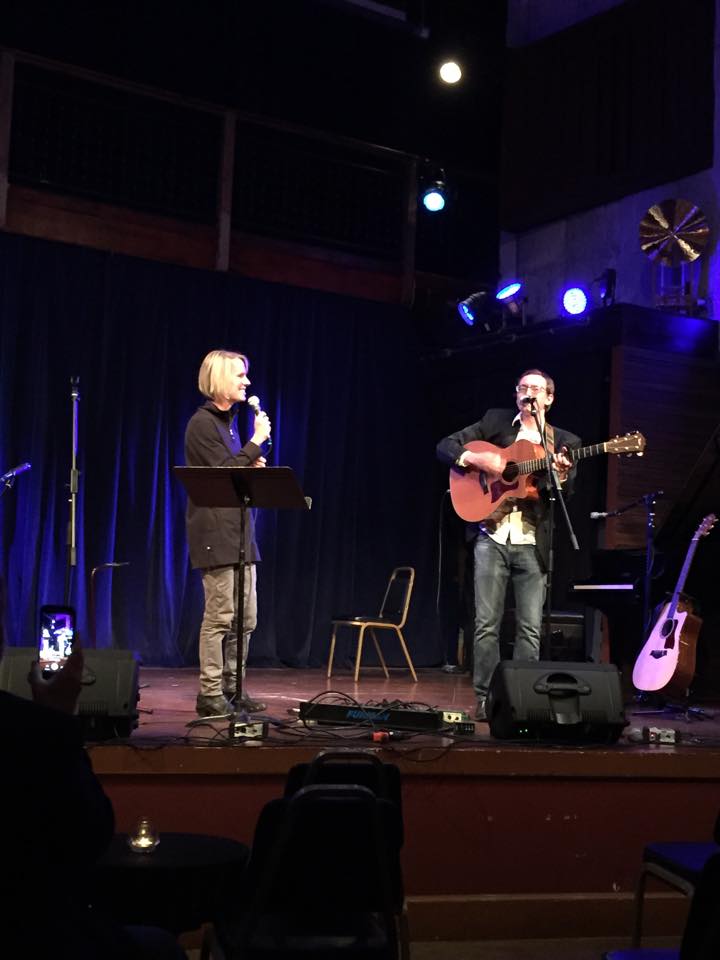
with Sandra Thompson
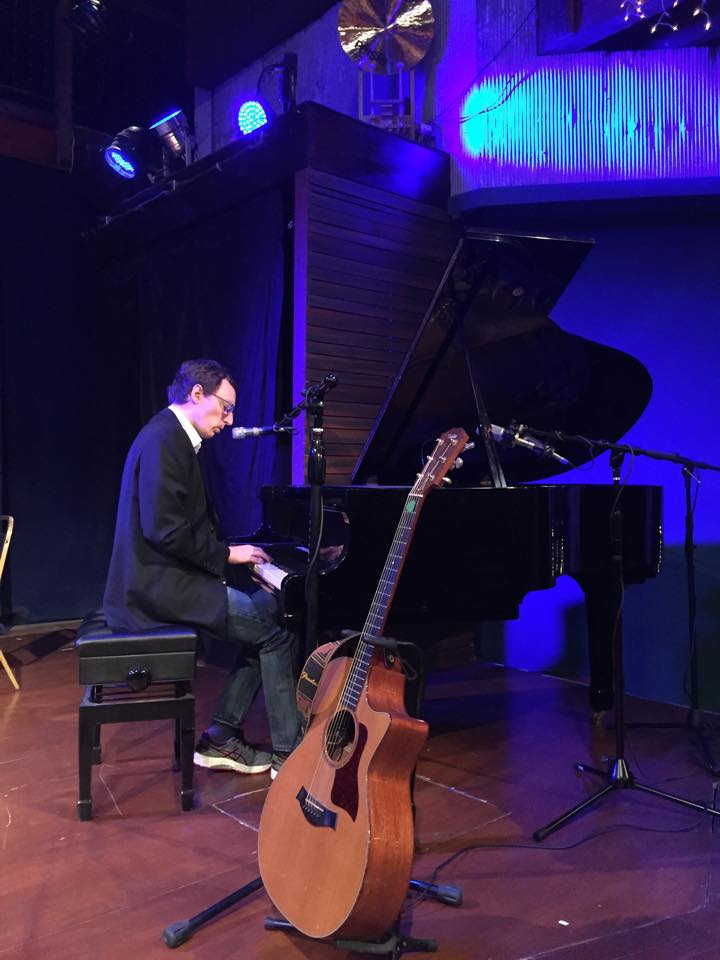
Sound checking before the show.
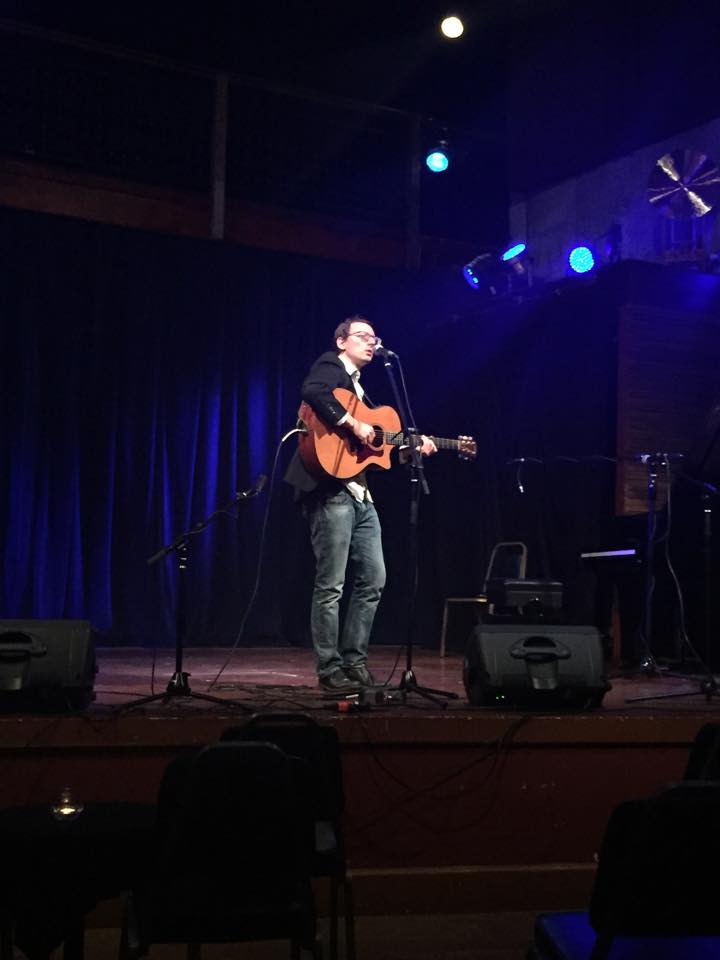
photo credits: Mike Gentry
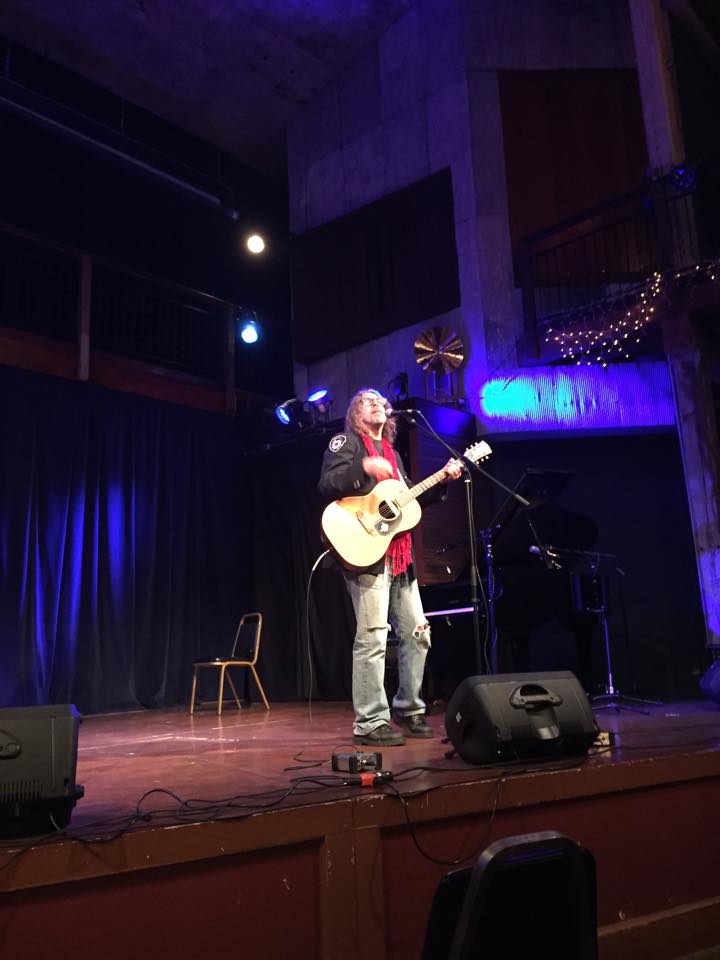
Mike Gentry performing at the Acorn
When I decided to pursue music full-time, I was nervous about presenting the story of my bio.
Were eight years of teaching a lost chapter from the music industry’s eyes? A venue owner had once told me when I was 25, “You’d better go for it now! Once you’re 30, it’s too late!”
I agree with the general premise that the music industry is a young person’s game, but hiding one’s age isn’t healthy.
So there I was, leaving a teaching career, packing up room 227, planning to release my third CD and play gigs to pay the bills, all while staring down that 30th birthday that summer.
Oddly enough, as Peyton Tochterman reminded me during our May tour, the story of being a teacher (like Sting!) is what makes me unique. People ask me the most about the classroom and that risky decision to quit.
In a world of memes and Facebook arguments about the color of a coffee shop’s cup, standing out is is as simple as being yourself, sharing your story, and presenting your art.
When we embrace our story, we embrace who we are.
* * * *
WCBE 90.5 FM is featuring an interview with me on The Craft show tonight at 8 PM, and my story of teaching life and gig life are the main themes host Doug Dangler and I discuss. Listen to the Craft on WCBE 90.5 FM or stream it online here.
I’ll be playing in Columbus, OH, Friday, Nov 13 for Six String Concerts series at the Performing Arts Center. Tickets are $15-22 here.
Saturday, I’ll be at Taffy’s in Eaton, OH, 8 PM ($5-10 suggested donation)
Nothing has forced me to accept the true value of time more than my baby, Ginny. My self created rule: During baby’s naps, I must either:
1. practice music
2. rehearse sets for shows
3. clean a part of the house, outdoor choirs
4. write
5. read books (no Internet stuff, no news!)
6. exercise (walk dog), or
7. take a nap. 😉
Natalie often jokes, “What did we do with all of that time before we had a baby?”
(I had a larger theme to share, but Ginny awoke when I was typing this last sentence!)
What I love about art (writing, music, etc) is how one doesn’t need to be the fastest, strongest, biggest to find success.
Art is a great equalizer.* Usually, it has a low barrier to entry. (Get a pencil, a piece of paper, and go.)
And now with Youtube videos galore and many mentors available via Skype, the self-motivated learner can carve a classroom right at their computer, even mobile device.
The teamwork of sportsmanship is a valuable theme to keep in the artist community, but art is more like achieving a personal record (running, golf, etc.). Sure, competitive natures do inspire great art (Beach Boys and the Beatles), but it’s not the overall point of the “game”!
No, an artist doesn’t need to be the fastest to the finish line; the artist simply needs to be relentless.
[*Note, let’s not be naive and say the same about the business of art.]