When One of my Dogs Died, My Other Dog Accepted Change. (A Metaphor for Being Scared of Spotify)
This week, Radiohead’s Thom Yorke made headlines criticizing Spotify; the shit hit the fan in the music world again over a dead topic.
(Read here and here; and Lefsetz’s critique here and here. Oh and this. )
I understand his argument; but I also need to remember what it was like for Gunshy when my other dog Bonnie died. (Analogy time!)
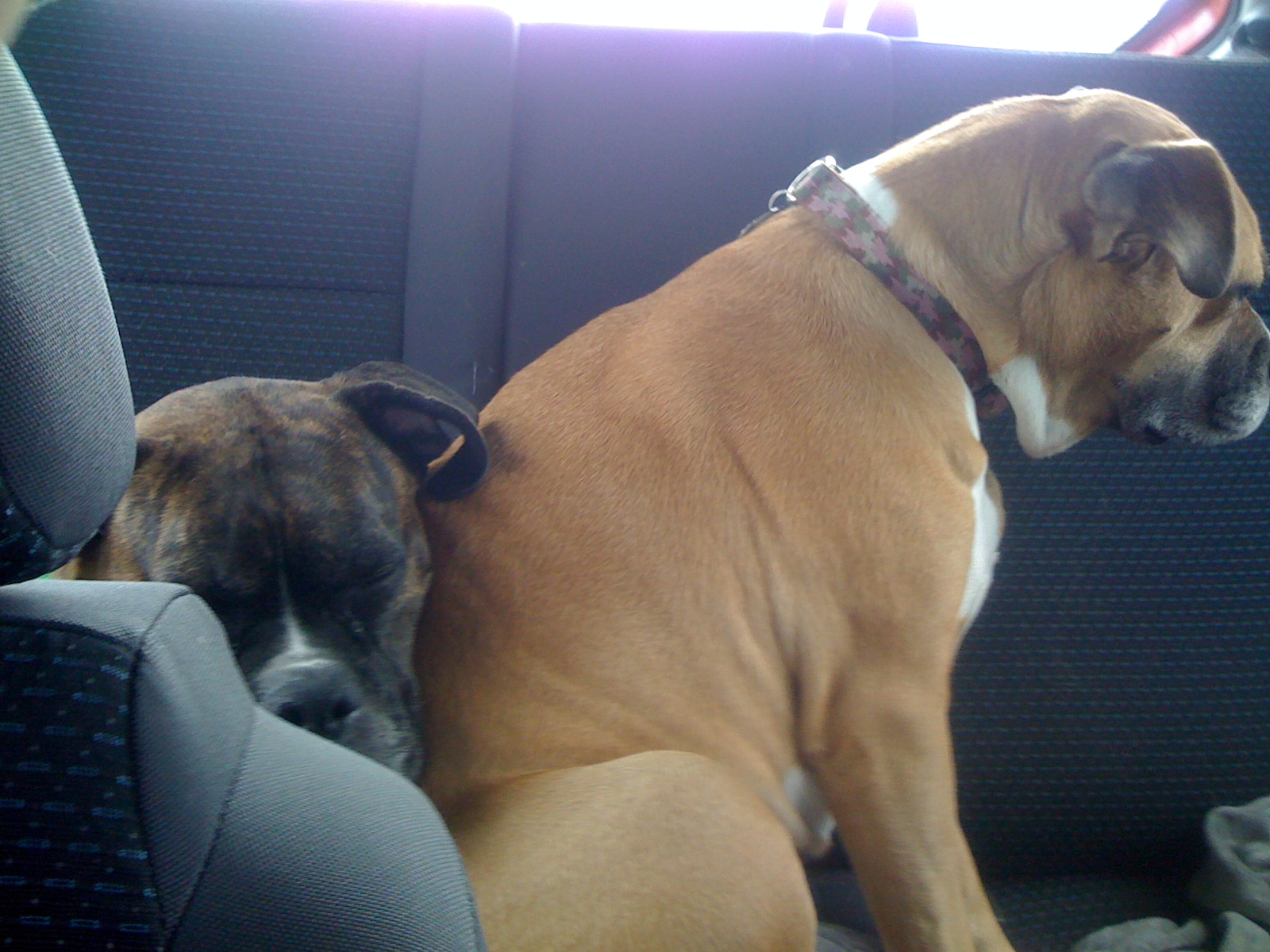
Everyone needs a Bonnie for a pillow.
When Bonnie died, our sweet boxer named Gunshy went through a major adjustment. He went from being the beta dog, the one who followed Bonnie’s lead, to an unknown world: the only pup!
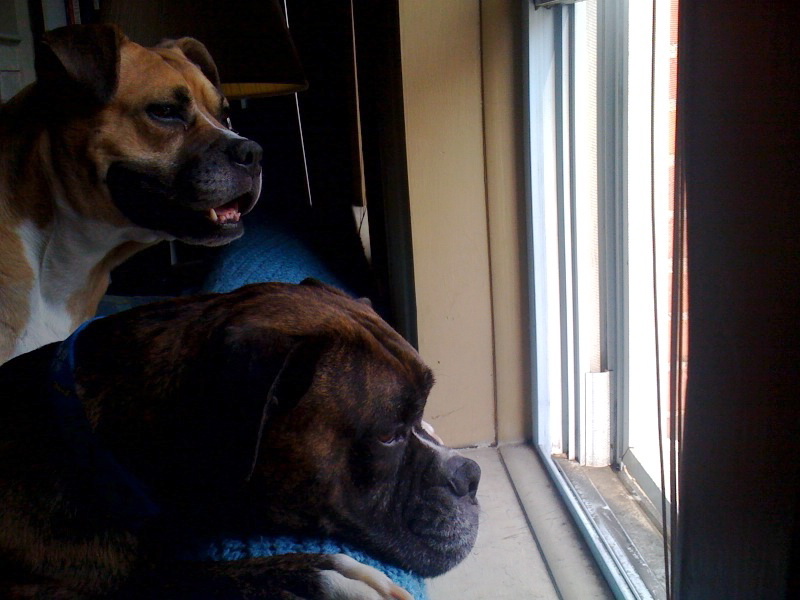
The first day as only dog, he peed in the house because he didn’t know how to ask us to go outside. He looked at us, walked behind a chair, lifted his leg, and peed. He then tried to lick up his own pee because he felt sad that he broke a rule. (He was the sweetest dog, ever)
You see, it was Bonnie’s job for years, to tell the humans that Bonnie (& Gunshy) needed to go potty. Gunshy’s job was to let his bladder hold it until Bonnie made a stink.
After Bonnie died, Gunshy learned how to be the alpha dog. It took a while for the transition to be made, but he didn’t try to recreate the past. He lived in the present, and found his new place in life. When we got a new puppy, named Lois, Gunshy had had made the full transition to alpha.
In the music business, we are still mourning death of the old guard. (Pre-Internet, CD sales, etc.) I’m sorry, but it’s already dead.
Musicians and artists need to spend energy adapting to the unknown future. Death and change are inevitable. How you adapt is your choice. Musicians need to be like Gunshy, find a new place in this complex world.
Waiting for Bonnie to tell us to go outside isn’t going to happen.
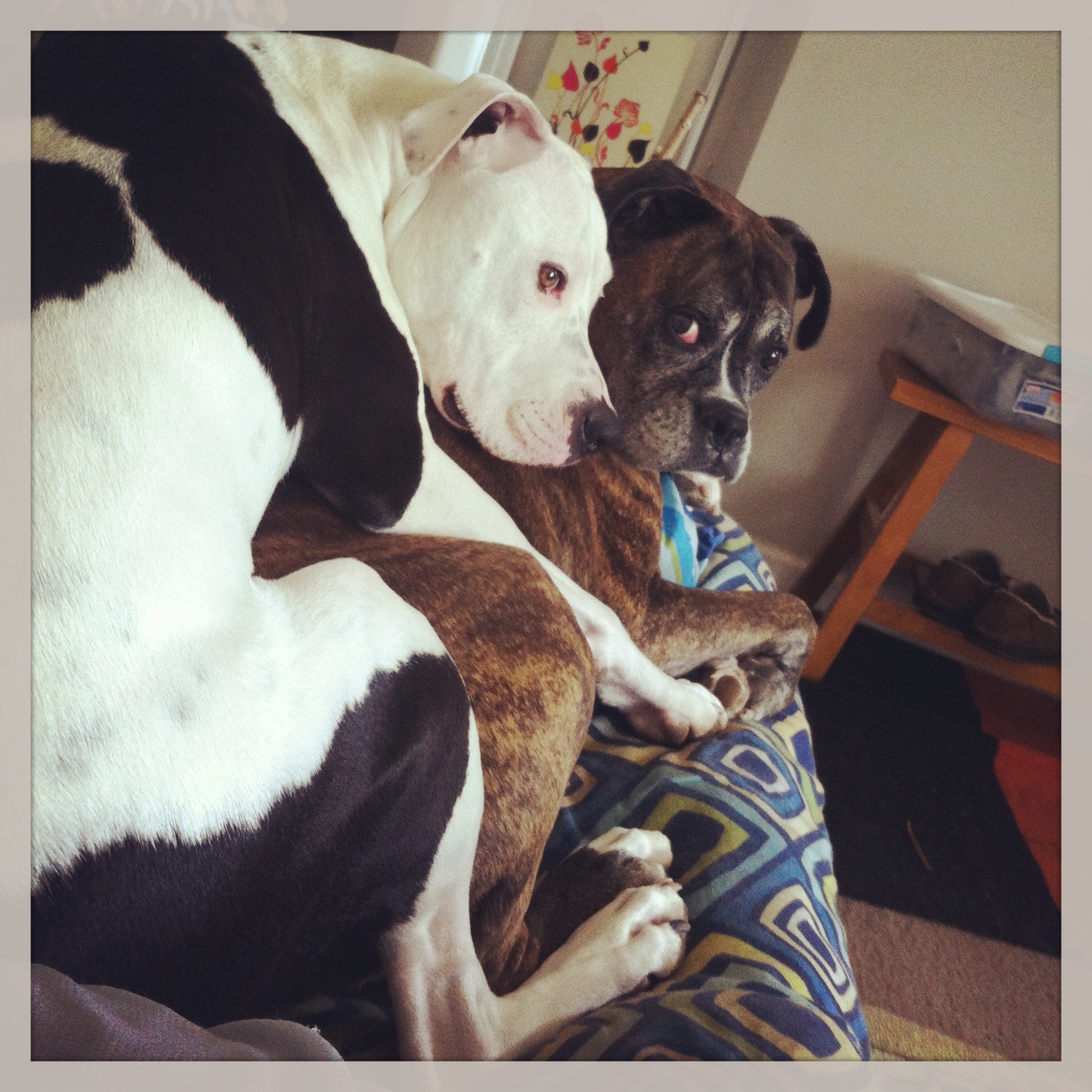
Gunshy had his turn at becoming a pillow, too.

You Need to Be as Good as the Beatles!
“You need to be as good as the Beatles to make it!”
I think this statement is f’n ridiculous.
The month before I quit teaching, I attended a wedding. The uncle of the bride sat next to me at dinner, asked me what I did for a living. I told him I was leaving my teaching job soon to focus on music.
The conversation went from lighthearted to uncomfortable, quickly. It ended with him belittling my music goals. Somewhere in the conversation he asked, “Are you as good as the Beatles? You need to be as good as the Beatles!”
I love the Beatles. I think they wrote some of the best songs ever. But I want to scream any time a Baby Boomer tells me I need to be as good as the Beatles to make it.
You see, the Beatles were just four, hardworking guys who worked with other hardworking people. They studied great songs. They played long gigs. They loved music.
But they also lived in a time where pop music, TV broadcasted performances, and loud concerts were new. A time where there was a monolithic culture.
There won’t be another “Beatles.” Many say this as proof that “music today isn’t as good as then.” Bullshit! We can’t have another Beatles because we can’t recreate that time. (Nor should we want to…)
What we can do is create something that makes us feel great, and hope it makes others feel great.
Don’t try to be as good as the Beatles. We don’t need another Beatles. Try to be as good as your best self. We need a unique you.
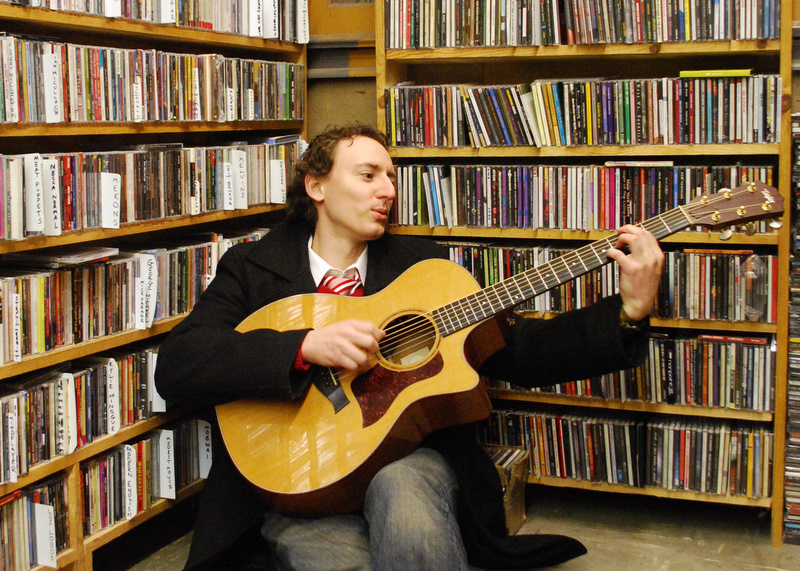
Photo by Anne Glista
How did you get your start? (& that one time I saw John Mayer get his start playing at a bookstore)
“How did they get their start?”
I obsessed over that question.
I think this question started taking over my brain because of my experiences watching John Mayer’s career grow before my eyes in 2000-2001.
I discovered Mayer’s music from a sampler CD that lead to finding his self-made MP3.com. (Remember when that existed?) I went to see him play his first gig in Michigan at the Shelter in Detroit,with Howie Day. I even saw him play at Borders Bookstore in Ann Arbor!
Within two years, I had watched his career jump from 300 capacity clubs to the Michigan Theater to DTE Music Theater.
It was nuts. Probably inspired me too much. I kept wondering, how did he get his start? What’s the path I should follow?
Here’s the secret. You start by just starting. There is no one path. Every musician and artist started their journey by simply putting one foot in front of the other.
You find time to work on your craft, every month, every week, every day, every morning. Whatever you can. You stop asking, “How did they get their start?” and start. The rest will follow.
Remember that time you were in a class where the teacher lectured for the entire period?* It doesn’t take long for our minds to wander.
The speaker doesn’t often know he or she’s lost the audience. Why? Well, most people are courtesy. They pretend to listen. (Or at least they used to pretend to listen before cell phones had Internet access and text messaging.)
The same problem can happen for a performing musician, especially the acoustic-styled singer-songwriter, the folk troubadour.
“Don’t speak song introductions longer than the actual song!” is one common joke.
It took me a while to realize I had to plan out, even practice, my song introductions and stage banter ,just like practicing the songs.
You don’t need to write out a speech, but you sure need to visualize what you are going to say.
One might say, “That takes away the magic,” but I argue that any good improviser practice improvisation. Practicing is what allows us to find the magically moments.
Peyton Tochterman is one of those songwriters who can get away with breaking the rule, and share a mighty fine, long story! Ask him to share his adventure playing in Afghanistan!
* I know Holly grads, I know. I was guilty of this a few times.
In my last post, I mentioned that I don’t believe we will hate our hobbies if we make them our jobs. (Read here.)
That being said, I also don’t believe everyone needs to feel compelled to make their hobbies or artistic passions their jobs.
- I enjoy writing poetry. I have no interest in trying to make a living from it.
- I enjoy running a few miles a week. I have no interest in becoming a sponsored runner. No interest in running a marathon.
- I enjoy posting photos of my dog to Instagram. I have no interest becoming a photographer.
But I can’t live without playing, listening, analyzing music. I seriously can’t function.
In Catholic school, one my religion teachers incessantly talked about being open to “a calling.” (She didn’t mean a calling to become traveling troubadour, but too bad. That’s what happened.) Since I was 16, I would play for eight hours straight during the weekends in my parents’ basement. My mom and dad would take the earplugs out of their ears and joke, “That guitar must be a part of your body now.”
That wasn’t far off.
Making a living from music is more about my ability to enjoy music as much as possible. I feel blessed to be able to do this, but it’s also a curse. If you asked me what I would also enjoy doing if I couldn’t play music, I wouldn’t be able to come up with an answer.

How I make time for lunch.