I met songwriter Camela Widad at Folk Alliance (SERFA) in 2013. She’s a real-deal songwriter, a Falcon Ridge Emerging Songwriter finalist, and an experienced Folk Alliance showcase artist.
I’m lucky to also call her a friend.
In 2014, I went to my second SERFA conference, but was extremely unprepared. I hadn’t rehearsed very much, I was sleep deprived from constant gigging, and I hadn’t even packed enough clothes for the weekend.
It didn’t hit me how unprepared I was until the first night of the music conference, as I was standing in the foyer of the conference center, watching about 20 songwriters share songs by the fireplace. I was relieved when I saw Camela walk up. A familiar face!
Camela asked why I was sitting on the outside of the circle, watching and not participating; and I didn’t know how to answer the question, except share the struggles of that year. Trying to close on the house, the loss of the first pregnancy, my tiredness of the road…
“I’m not even sure if I should be here at the conference, Camela,” I said.
Camela offered these simple words of encouragement: “It’s going to be OK, even when it’s not right now. That’s why you’re here!”
That beacon of light is in her songwriting, too.
It’s inspiring for me to meet other parents who are touring songwriters. This is no easy road, and the people who find healthy ways to balance the music and family life are my role-models.
So I interviewed Camela, asking her to share thoughts about songwriting, family, and maintaining a creative life.
-
MV: How was your experience at Falcon Ridge Festival? How has the experience of being an emerging finalist affected your songwriting this year?
CW: I had a great time at FRFF except there is so much to do that I definitely had to deal with the FOMO – Fear of Missing Out! Being an Emerging songwriter this year is an honor and more than anything it gave me a sense of affirmation. Knowing that my work is connecting to such a great community of music lovers and many amazing songwriters, felt like I am right where I need to be. And then somewhere inside there’s a little voice that says, “OK, next!” So, sitting down to write hasn’t changed much. Maybe it should, maybe more people will be listening but the process of digging in, listening to a song emerge from inside and trying to bring it to life; that is the same.
-
MV: Being a new parent myself, I appreciate meeting songwriting parents! How do you maintain that work, creative, parenting balance? Any tips for new parents?
CW: Great question! When my daughter was born I took her to all of my shows with her Dad. She grew up with it until she couldn’t sit still. Then extended family, grandparents–if you have that available–are a great help.
I love being a parent and I love being an artist, so I made a decision to create a life where I could have both.
MV: Do you do other musical work to maintain that balance?
CW: I teach voice (self employed) so that I can be on the road when I want and be home with her everyday after school, or she is with me at the studio while I teach (kind of like the old-school family business, where the whole family grows up with the business).
MV: I imagine communication is really important.
CW: I give her plenty of time to talk about and process her feelings about me, my work, her life and sometimes have to give her “leading questions” to pull out what’s going on inside of her. As soon as she says what she needs to, when she is upset or feels she’s not getting enough time with me, she feels much better and then we can work on solutions to feel more connected when I am gone.
MV: Any tools help you stay connected while on the road?
CW: I make sure to check in, Facetime or Skype when I’m on the road. I did a lot of this early on so now, she’s 12, she’s says “Uh, Mom, I don’t need you to check in with me so much – OK!”
MV: Wow! I love that anecdote! Being a new parent where my baby is crawling, it’s hard to picture her future independence!
CW: My advice to new parents, to any new parents is this: listen to your inner wisdom and listen to your kid(s). You’ll know what to do.
-
MV: The “Warriors of Love” theme is so consistent through your newest record. How did this theme emerge? Is it coming from personal experience?
CW: I have a soft spot in my heart for social justice. “Warriors of Love” was my exploration of a concept album based on principles I’ve learned and people I’ve met.
I took a peace keeping training in 2011-2012 where I learned conflict resolution as well as eye-opening listening skills. It’s amazing how much conflict we can resolve just by truly listening to someone without thinking of our response! I have also traveled extensively in the US and some parts of Europe.
MV: How have these travels affected your perspective on the world, let alone your songwriting?
CW: By far 95% of the people I have met are really good people, loving, generous, and a little bit heart broken that our political/economic world has gotten to this place, not representative of who we truly are. I wanted to give these stories a voice, give a voice to us, maybe connect us a little bit, people continuing to show up with love or compassion when it is so hard, when being bitter and cynical would be easier, those loving with the strength of a warrior.
I grew up listening to Americana music on vinyl so I wanted an album to feel like you were home listening to and telling the stories of our experience with that laid back Americana sound and some subtle ear candy thrown in! I like transitions on albums and WOL has some that I am really proud of.
-
While writing personal themes can be cathartic, but scary! Any advice for songwriters scared to share such personal themes and events in their own songwriting?
CW: Leap and the Net will Appear… I was encouraged to write all the way into my darkest memories.
I remember thinking, “Who is gonna listen to this?” Telling a balanced story is different that using a song to be therapy but you have to start somewhere.
MV: That honesty is essential for songwriting, isn’t it.
CW: Get really honest, there is no other way. Play the songs out, see what happens, you’ll find out quick if it was too much or if it gives the audience their own experience of your honesty. To me that means I have to make the song universal sometimes and less personal.
MV: I was blogging about that debate, recently, when to go topical, universal or personal…
CW: It does depend on the market you are writing for but I have found the more universal the better my fans can hear their own story or experience in the song. I can’t get really dark with my music, it’s just not me. If I have to take on some difficult material, I end up creating the balance within the song, the yin/yang, darkness/light, that is what feels honest to me.
When I wrote a real humdinger of a cathartic song, “My Turn” track #6 on “Warriors of Love” I really did think no one would want to hear it.
MV: That’s one of my favorites! I still vividly remember hearing you sing that a SERFA. It sounds so great solo acoustic, but those strings on the track a beautiful. Did you road test it before recording it?
CW: So I tried it on the road for a Monday night show, about a year before we put it on the record. It was a smaller room just for me to see what would happen. Pin drop silence at the end. I thought, “Oh man, I really blew it on this one.” But then everyone was wiping their eyes, taking a breath and were thanking me for writing it. WHAT?! Lesson learned.
* * * *
Buy Warriors of Love on iTunes here.

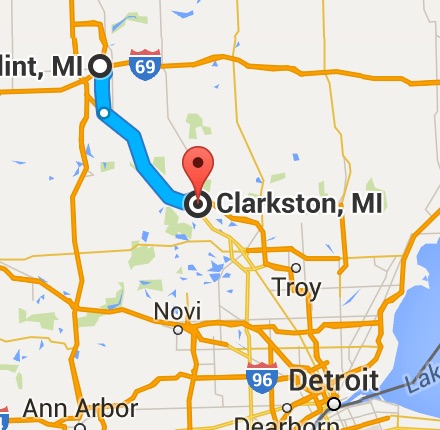
Just a reminder: Kid Rock lives 26 miles from Flint
He also said, “let the mother——- business guy run it like a ——- business.”
Music isn’t a saddle or an automobile
Stop me if you’ve heard this cliche, the definitive example about change:
“Well change is inevitable: Look at the saddle making industry after the automobiles industry took off!”
When I mention to people the difficulty of navigating the digital landscapes for musicians and songwriters, I’m bound to hear that statement.
Yes, I get it–the facts about inevitable change–but here’s why that analogy doesn’t work for me: Music isn’t a saddle. Music isn’t an automobile.
It was music back then, and it’s still music now.
Yes, the products and platforms change–scarcity has been unlocked–but people are spending more time than ever before listening to music. Music is valued by the time people spend with it, yet the systems we are told to embrace seem to devalue music more and more each year of this new decade.
Spotify has shifted the value to not only pay-per-stream rates of less than a penny, but also a system where a fan has to spend an insane amount of time of consumption to equal any value returned.
Facebook changes their algorithm, figuratively demanding you upload your videos directly (which pays nothing); and if you share a Youtube link on your newsfeed, it won’t get any impressions as of 2016.
Quincy Jones said last year, “Honey, there is no music industry.”
Seth Godin posted a thoughtful piece today about living with your “frustrum” today:
The good news is that it’s entirely possibly you don’t need the peak of the pyramid. The leverage that comes from digital tools means that it’s entirely possible to do just fine (and have a powerful, positive life) without being David Bowie. Once you know that this is it, perhaps this might be enough.
However, I’d like to point out a hole in his statement. The corporations who own the digital tools don’t care about music. They don’t share the same interests as the creative classes. This technology boom isn’t trickling down into a creative class boom anymore.
There is little to leverage left.
Here’s another cliche: History repeats itself, and maybe the songwriter is a canary in the coal mine.
History repeats itself…We are stepping back into the 1800s.
We are stepping back into the 1800s, one that might resemble what Howard Zinn describes as the other civil war, the one of the working class people; historical facts that’s not taught much in the textbooks, but is mirroring the data: The middle class is erroding; the income inequality is obscene. And dissatisfaction is bubbling up beyond the creative class.
And artists, I don’t think we need to just accept living with our frustrum.
10 surprises to plan for as an artist to avoid going into “musician-debt”
The Boy Scout motto is “be prepared”; and it should be the touring musician’s motto, too.
When I left my English teaching position to hit the road as a musician, I knew my monthly expenses, and felt confident I could gig enough to cover my bills.
Cell-phone bill? Student loan? Rent? Gas? Groceries? Blue Care medical insurance? I’m good!
However, the first December as a full-time musician in 2011, I got super sick with viral meningitis, and I had to cancel a full week of work. While I had planned enough to have a savings cushion for emergencies, I learned the hard way that budgeting is about planning ahead for the potential surprises.
Here’s a list of things to be prepared, and hopefully avoid going into “musician-debt”:
- Car maintenance: You can’t neglect this. Touring, even locally, racks up miles, and cars need to be fixed, oil needs to be changed, and cars need to be reliable. If you play a lot of gigs, your car is going to breakdown. It’s inevitable. (Giglife Haiku #9)If you don’t budget for it, you will find yourself stuck on the side of the road with no way to fix your car. We all need help at times, but if your band needs to do “Go Fund Me” campaign because your car broke down, you weren’t planning ahead. Mike Errico says it bluntly in his NYT article: “But if you need to crowdfund your hospital costs, you were never on your feet to begin with.” Let’s add car maintenance to that sentence.
- Instrument maintenance: I’m spending between $300-900 on repairs and maintenance on my three acoustic guitars that I use on the road to keep them in professional order.This might seem like a lot, but if I go into the recording studio and my guitar has terrible fret buzz, I’m losing money in the end! Budget for those repairs. Our instruments are our tools. Plus, be prepared for accidents! A storm blew my guitar off the stand at a festival gig last year, and I had a $300 repair! (Thanks you to my guitar tech, Mark Weninger for saving the day!)
- Sick days: They get me every winter. After Christmas, my baby got her first cold, and it spread through the entire family. I had to find a replacement for my mash residency to be able to heal my voice for a theater gig. Right now, I tend to miss only two or three gigs a year to sickness, but it’s always the worst timing! So be prepared! When you aren’t gigging, you aren’t making money!
- Snow days: I loved these as a public school teacher! The local TV news would announce Holly Area Schools were closed because of winter weather, and I’d be sitting at home in my pajamas, grading papers, cooking breakfast, and enjoying coffee on a snow day. As a musician, snow days are my enemy. Like sick days, we have to plan for them to happen. Usually, I can get to the gig if I leave early enough, but if ice is on the road, don’t chance it. Sometimes, I get to the gig, and then discover I’m stuck in that town for the night because the storm is too hazardous to drive home! Hotel bills, boo!
- The holidays: December is the most expensive month, yet also the time when I’m most susceptible to getting sick or facing inclement weather. I recommend planning your holiday budget in the fall.
- The peak times and down times: Every business has peak times. Mine is the summer when Michigan restaurants start booking music for their patios. Wedding gigs happen most often too. When my friends are planning their summer vacations, I’m planning my busiest work season, and playing as often as possible! I like to take my December slower, so that’s when I take time off with family.
- Zero is always a number! When planning a possible recording project or ticketed show as an undiscovered artist, remember that zero is always a number! If you plan on a number of sales helping you breakeven with costs, you might find yourself in debt! This happened when I recorded my single, “Love Birds” in 2013. I spent $1300 to record the single, and estimated that the digital sales would help me breakeven.The song turned out great, but I didn’t leave myself with much money to market it, and I learned quickly that a single doesn’t attract as much attention as an EP or full-length in the folk world! I was really bummed after the initial sales reports, but this is part of business. Learning, adapting, and keep creating.
- Industry trends might not be your trend: Which brings me to this odd discovery. I figured “Love Birds” was going to do better as a digital single in 2013 since CDs sales as a whole were dropping in the music industry; however, I’ve discovered in 2014 & 2015, I’ve increased my CD sales.Now, these aren’t large enough numbers for me to count on each year, but it’s a reminder to us new artists that getting sales at shows is so much easier than trying to get digital sales. Yes, we should be knowledgable in the industry, but you might find that your life or genre doesn’t match the trends.
- 80/20; 90/10: This equation shows up a lot in my numbers. If you have 1000 likes on Facebook, only 100 of those people might actually be seeing or interacting with your posts. And your mailing list might be at 20%.If you know 100 people in a city or region, you might get 10 or 20 of them out for your gig. Occasionally, you might increase the success rate if it’s a higher profile show and you get a lot of press, a new album release show in your hometown, or a unique event. But most of the time, count on your 80/20 or 90/10 equation!
- If you take someone on the road, it’s like a short-term marriage: Touring is really emotionally and physically draining. We bring out the best and worst of ourselves when we are on the road, so it’s important to plan ahead before you share those tours! Maybe start with a week of shows together before planning an entire month together in the van.
The Two Ways We Show Our Support of Art: Time & Money
As musicians and songwriters, we are the canaries in the coal mine for change.
Our “product” is bite-sized: songs take minutes to enjoy, seconds to taste; digital versions are easily sharable and no longer scarce.
I was thinking about this a lot yesterday, and then my wife wrote a wonderfully funny, Natalie-toned blog called, “That Time I Drunkenly Ranted About Hating Libraries” (read it here). (PS: She doesn’t hate libraries.)
It’s a constant, inner battle going on for us songwriters. We’re told, “Hey! If people like your stuff, you should give it away for free! Fans will come to a show!”
I do agree, because anonymity is the enemy to the new artist; but there is also a tipping point in the other direction, throwing the baby out with the bathwater. There are only two ways we show our support of art, with our time, and with our money.
There are only two ways we show support to art: With our time and with our money.
Yesterday, I was chatting with my friend about Spotify, debating if it will ever reach a tipping point where more songwriters (not just outliers) start seeing revenue that is meaningful.
He said, “I don’t expect it to be CD levels, but at least it could be something meaningful.”
I said stopped him right there and asked, “When’s the last time a business had 40,000% growth rate?”
He chuckled.
I don’t mean Spotify having that level growth as a business; I mean the songwriters and bands.
Go check your Year in Spotify numbers. My guess is you listened to your top five artists 200-400 times. It takes 1500 time to equal an album sale.
Your top five will never even reached that after years of your consumption! What about the top 30 artists? Top 100? The math isn’t in the songwriter’s favor, folks! Do the fricking math!
I listened to my new favorite artist Gabriel Kahane (who was dropped by Sony last year) 408 times last year. I wanted to go see him on tour, but I had to work. So maybe my spins earned his label, publishing, and songwriting $3.26 last year. Am I still a true fan?
Am I still a true fan?
The theory was it took 1000 true fans to make a starting career as a musician. If 1000 true fans spent $10 on your music, that’s $10K. If they spent $50 you’ve made 50K.
However, if 1000 true fans listen to you 100 times on Spotify, that artist made $350-500.
You need to see these numbers as a canary in the coal mine.
Now, I’m a Spotify consumer. I’m not saying us streaming listeners are evil at all. Streaming helps combat piracy; but does it actual combat it enough to bring in any money for the creators?
I think songwriters like me need to accept that we shouldn’t expect the streamable economy to ever equal any sizable monetization, because you would need an insane amount of growth that no business has ever experienced.
I had 100% growth on Spotify last year as an undiscovered artist.
But I would need 99,900% growth to equal my CD revenue made from my three little EP releases. LOL!
Even if we just hope streaming equals a portion of the revenue of CDs, I’d need to see a 13,233% growth rate to equal my CD sales from last year.
So here we are, being told to accept the numbers, and just tour more.
Mike Errico wrote one of the best articles about how touring is not going to save musicians in the age of Spotify, published in the New York Times. (Read it here.)
Why? Basically, your health, your time, and wearing out your body.
Errico’s reminder hit me hard:
“And yet from a business standpoint, it’s hard to find a model more unsustainable than one that relies on a single human body. This is why we have vice presidents, relief pitchers and sixth men.” – Errico
So true. Any time I get sick, as I was for a the last week in December, I’m missing out on potential money. Bummer during the holidays!
I play between 150-200 gigs a year. When I share this number with fans, a lot of people are amazed: “How does your voice handle it?” (Pro tip: I rarely drink alcohol and I do vocal warmups.)
BandsinTown app named The Accidentals as the artist who did the most shows last year with 219.
But you want to know the truth? That number is normal for us road warriors. My friend Chad Elliot played more shows than the Accidentals last year, but he probably doesn’t use the BandsinTown app so he doesn’t get the title. I played 224 in 2012 and 205 in 2013. (I’ve been able to cut my road time down by teaching music part time.) When I opened for Ellis Paul, Ellis told me he’s still rocking out 130-150 gigs a year in his 20th year as a touring artist!
My point is that spending 600 hours in the car a year–equal to 25 days of my life–isn’t going to be sustainable as I get older and as royalties and sales plummet.
I don’t know what the conclusion is, yet. I’m still in love with music. 2015 was a great year for me, musically.
I just think my wife is right. There are only two ways we show our support for art we love, time and money.