You Will Hate Your Hobby If You Make It Your Job
“You might hate music or art if you try to make it your job.”
That was the worst advice I’ve ever received during my senior year of high school.
I often parroted this ridiculous explanation to people who asked me why I was teaching rather than playing music. “Oh, I think I’d grow to hate music if I did it full-time.”
(Wrong. I wasn’t pursuing music then because I was scared I wasn’t good enough or that I wouldn’t make enough money.)
You see, no one hates their art or music when they make it their job. You might hate the business around the art or music, you might dislike traveling long hours to gigs, you might hate reading legal contracts, but you don’t hate music.
Same goes for teachers: No one should hate working with kids or dislike their favorite subject (English, math, history) because of the politics or business of the classroom. You might dislike grading papers, you might dislike having too many students in your classroom, you might be discouraged that the govenor signed a bill that decreases funding for education; but you don’t hate working with kids or hate literature.
I stopped believing we hate our hobbies when we make them our jobs. Instead, I believe we love our lives when we can pursue our passions to the fullest; that we are willing to find ways to work around the complications when we care about what we do.
Life is always full of complications. Why not accept the complications around something you love?

Music Major Failure, Major Music Success
In 1999, as a senior in high school, I faced my most disappointing musical failure: I auditioned for U of M and WMU’s music programs (specifically a focus on jazz guitar).
I didn’t get accepted into either school of music. Both rejection letters arrived on the same day, and I decided against auditioning at other schools, like CMU and Wayne State.
After the initial disappointment, my drive to study, perform, write, and enjoy music didn’t change. In fact, facing this disappointment early in my initial interests with music was really important for me. (There were–and are more–to come!)
I’m firm believer in the saying, “One door closes, another one opens.”
During college, I decided to open a different door. I attended WMU and study English/literature to get an education degree. This served two major successes for me:
1. It helped me get over being shy.
2. Studying literature, history and English helped me grow as a person, which helped me grow as a writer.
If I studied only jazz guitar in college, I would have sat in a practice room for hours a day, and graduated with no social skills, no interest in the world outside of a fretboard.* Becoming a teacher gave me the opportunity to do something that was not natural for me, public speaking. It also taught me to think about the needs of others. And reading literature and studying the written word helped me take joy in writing, and in sharing writing with others.
If you are seeking a life as an artist, you are going to hear the word “no” more than “yes.” It’s important to face failure as an opportunity, maybe even a success.
___
*Dear jazz majors and those with music degrees, do note this is an analysis of myself, not other people who have studied music in college.
I was a really shy kid. Guitar helped me open up a bit in high school, but forcing myself to face my fears of public speaking, becoming a teacher, and studying literature passionately with great instructors, in a discussion-based classroom, helped me beat my anxiety.

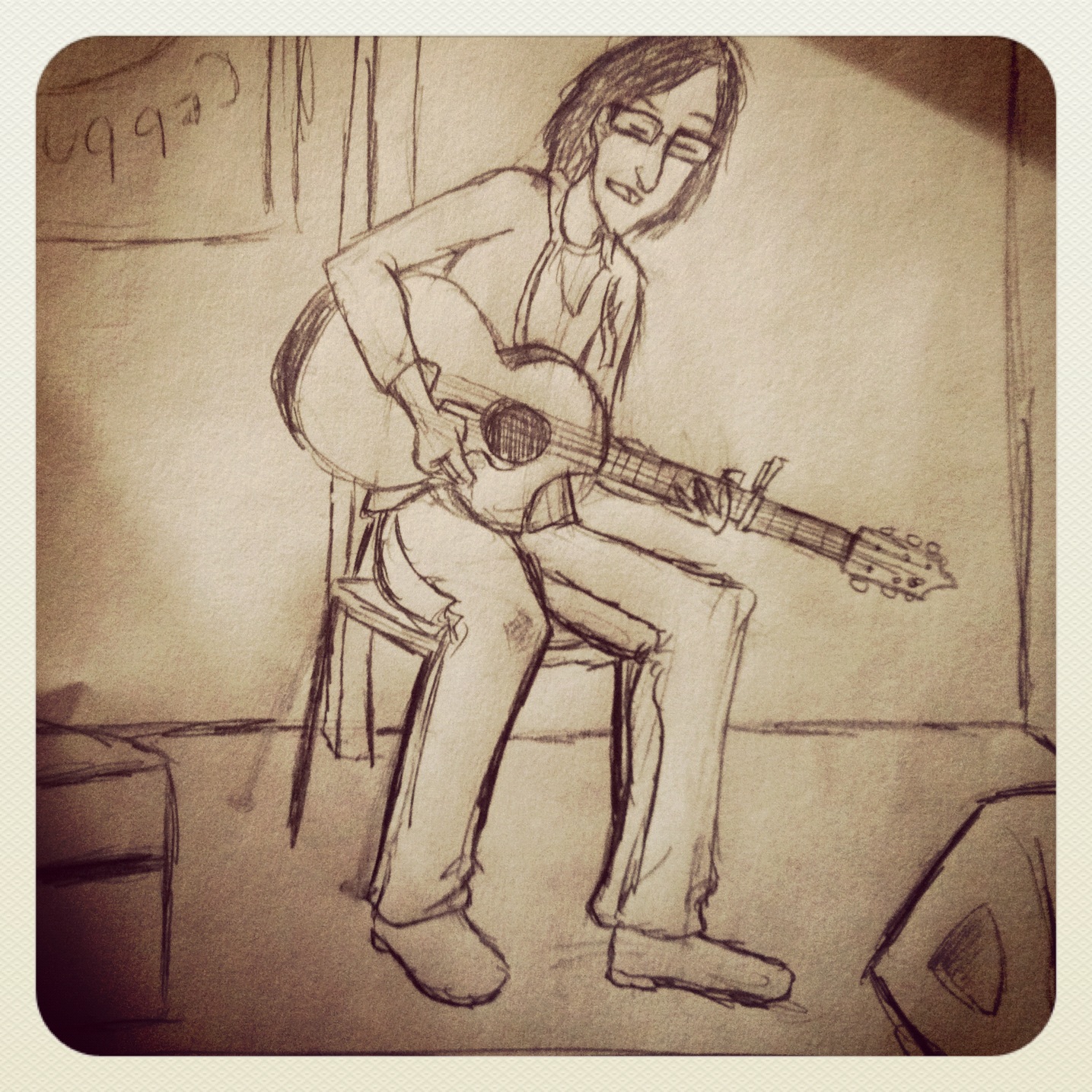
Illustration by Cal Green
At the #CGMF concert Monday, I chuckled at Ed Robertson’s introductions for the newest, Barenaked Ladies songs. “Since you guys can’t stop screaming for them, we are going to play a new song!” he said.
It was a light-hearted way of acknowledging that he knew the audience was there to hear hits, but the band wanted to share a new song or two. (After a new song, a hit followed.)
Which makes me wonder, whose needs matter more? The artist’s, or the audience’s?
Clearly, an audience is necessary for the artist; but without the needs of the artist being met, there would be no art in the first place.
A scale’s balance of the “audience vs. artist’s needs” tips quickly: Bob Dylan’s current live shows might be an example of the artist’s needs being more weighted than the audience’s.
However, it’s easy for an audience to be initially annoyed about an artist sharing something new that is wonderfully special, utterly phenomenal! (Ironically, Dylan’s historic electric performances; Chris Thile’s Punch Brothers’ first live show; The Decemberists performing their The Hazards of Love in its entirety.)
As performing musicians, there is nothing wrong with performing for our audiences; but there is also nothing wrong with performing for ourselves. When making a set list, it’s important to recognize the scale, and consider which way it’s tipping; and how far.

I often wonder what life was like as a traveling minstriel during Elizabethan time.
How difficult it must have been to travel from town to town, to seek patronage from lords of the house.
As a 21st century musician, I can’t picture traveling without the perks of GPS, a cell phone, IndieontheMove.com, Twitter, Youtube, a car, a website, a Priceline App, airplane flights…
Whenever touring gets difficult, I just remind myself, “At least you aren’t having an adventure like an Elizabethan minstrel!”
Yesterday, I was listening to Stateside on Michigan Radio, and Cynthia Canty was interviewing Tom Baily, director of the Little Traverse Conservancy. Baily used the word “adventure” many times during his discussion of why conservation of wilderness in important to us, for kids to have a place to “have an adventure…”
His use of the word “adventure” made me chuckle. Can we still claim to have “adventures” in the modern age?
The word “adventure” seems like an outdated term:
Ad·ven·ture:
(n.) an unusual or exciting, typically hazardous, experience or activity.
(v.) to engage in hazardous and exciting activity, especially the exploration of unknown territory.
And then it hit me–music and art are their own abstract wildernesses in which we still have adventures.
It is exciting to create. It can be emotionally hazardous to share one’s work, letting the world observe, consider, judge or criticize. The act of creation explores “unknown territory,” usually within our minds or hearts.
When we grow up, we often lose the spirit for adventure. Could being an artist or musician be one of the last ways to keep that spirit alive?
If so, than conserving our arts and music programs in our schools in communities is important, just like conserving the beautiful, scenic character of Michigan .
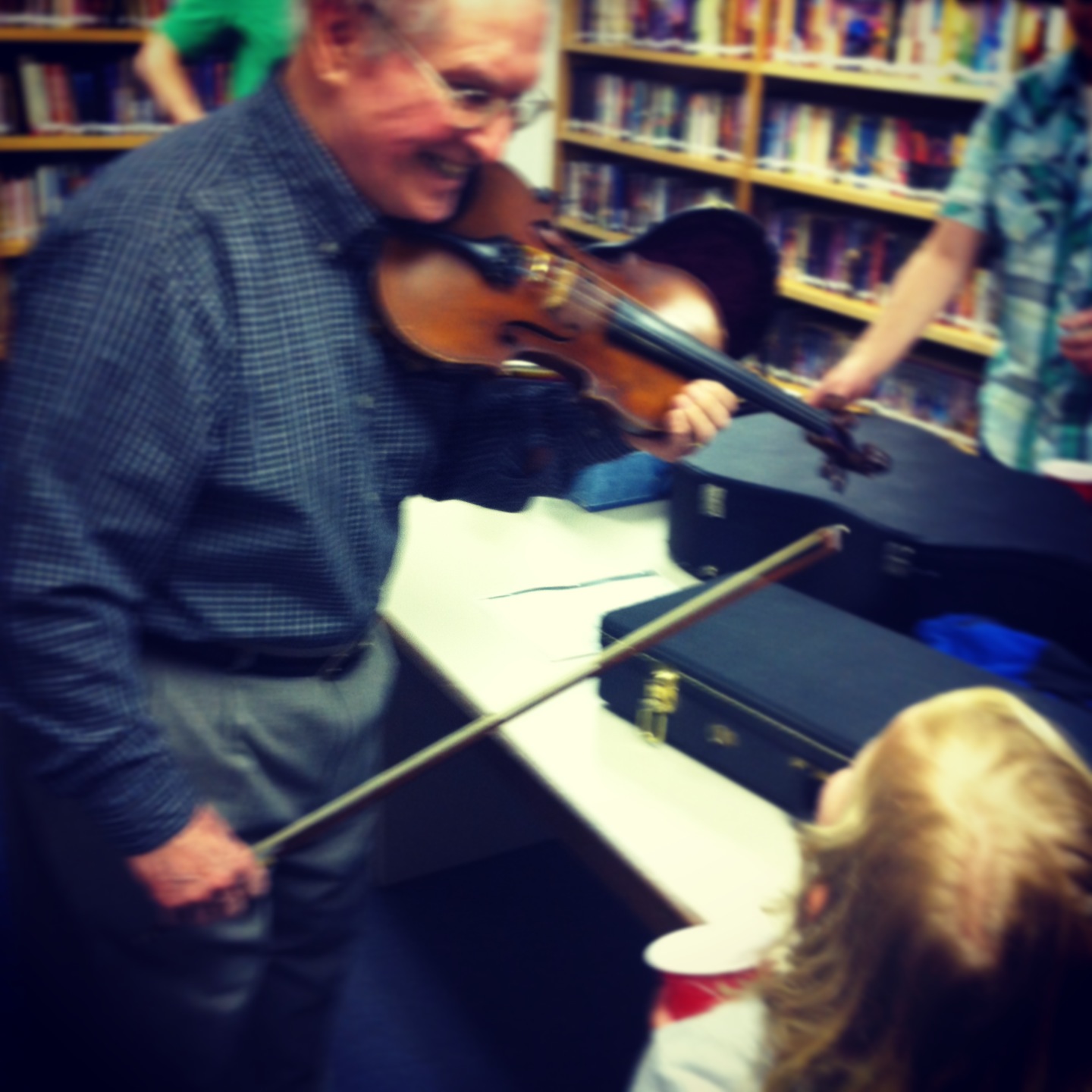
Grandpa Burg, still having adventures at 90 years old!
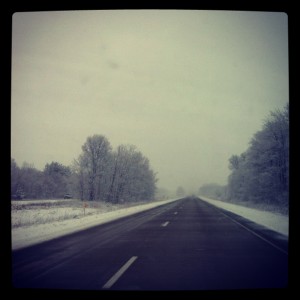
One of the most scary adventures I've had touring was when a five hour gig commute became a white-knuckling nine hours because of a winter storm on the 402 in Ontario. It was an adventure getting to Paul Federici's CD Release show!
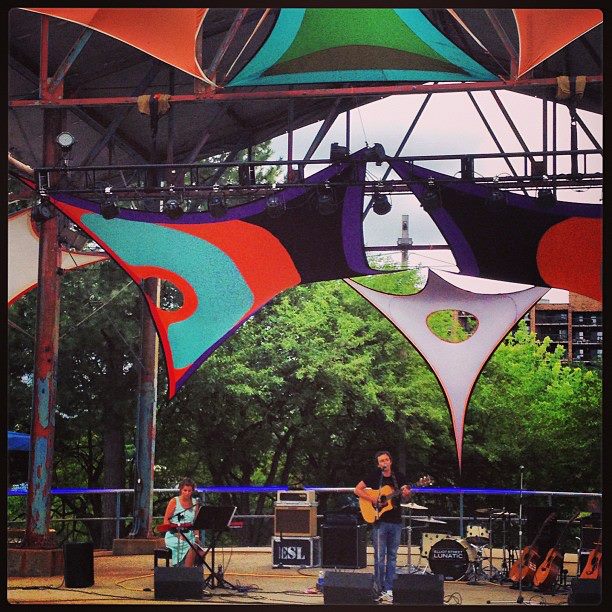
Set List: Common Grounds Festival, July 8, 2013
1. Empty Cup
2. Damn Fine Day
3. Love & Be Proud
4. Ohio*
5. My Lovely Enemy>Such Great Heights%>My Lovely Enemy
6. Only the Rain Knows Why
7. Made a Mess
8. Smooth+
9. Mahogany
10. Do You Know Your Fears by Name?
11. Driftwood
12. Love Birds
13. It’s the End of the World^
with Hannah Fralick accompanying on vocals, piano, organ, and guitar.
*Neil Young cover
%Postal Service tease
+Santana/Rob Thomas cover
^REM cover
9 & 10 Mike Vial solo
10. first time this song was played live
10. first time Mike played piano live